
Have you heard whispers of a powerful Jamaican herb, only to find a tangle of conflicting information online? One source may praise its virtues, while another warns of its dangers, leaving you uncertain about what to believe. This potent plant, known as guinea hen weed, holds a revered place in traditional wellness, yet it deserves to be approached with respect and understanding. It's natural to feel hesitant when it comes to your well-being, especially with so much noise.
This guide is here to bring clarity and calm to your journey. We will gently walk you through the time-honored wisdom and emerging science behind this remarkable herb. You will discover its traditional uses, learn how to prepare it safely for your modern rituals, and understand the important safety considerations. Our promise is to empower you with pure, authentic knowledge, so you can make a mindful and informed decision about welcoming this ancient ally into your life.
Key Takeaways
- Learn the time-honored role of this herb in Jamaican folk wellness for supporting the body's natural balance.
- Discover the key natural compounds that modern science is studying to understand its powerful traditional benefits.
- Master the simple, respectful ritual for brewing guinea hen weed tea to experience its properties safely and effectively.
- Understand why choosing ethically wild-crafted sources is essential for the purity and potency of your herbal ritual.
What is Guinea Hen Weed? Unearthing a Jamaican Treasure
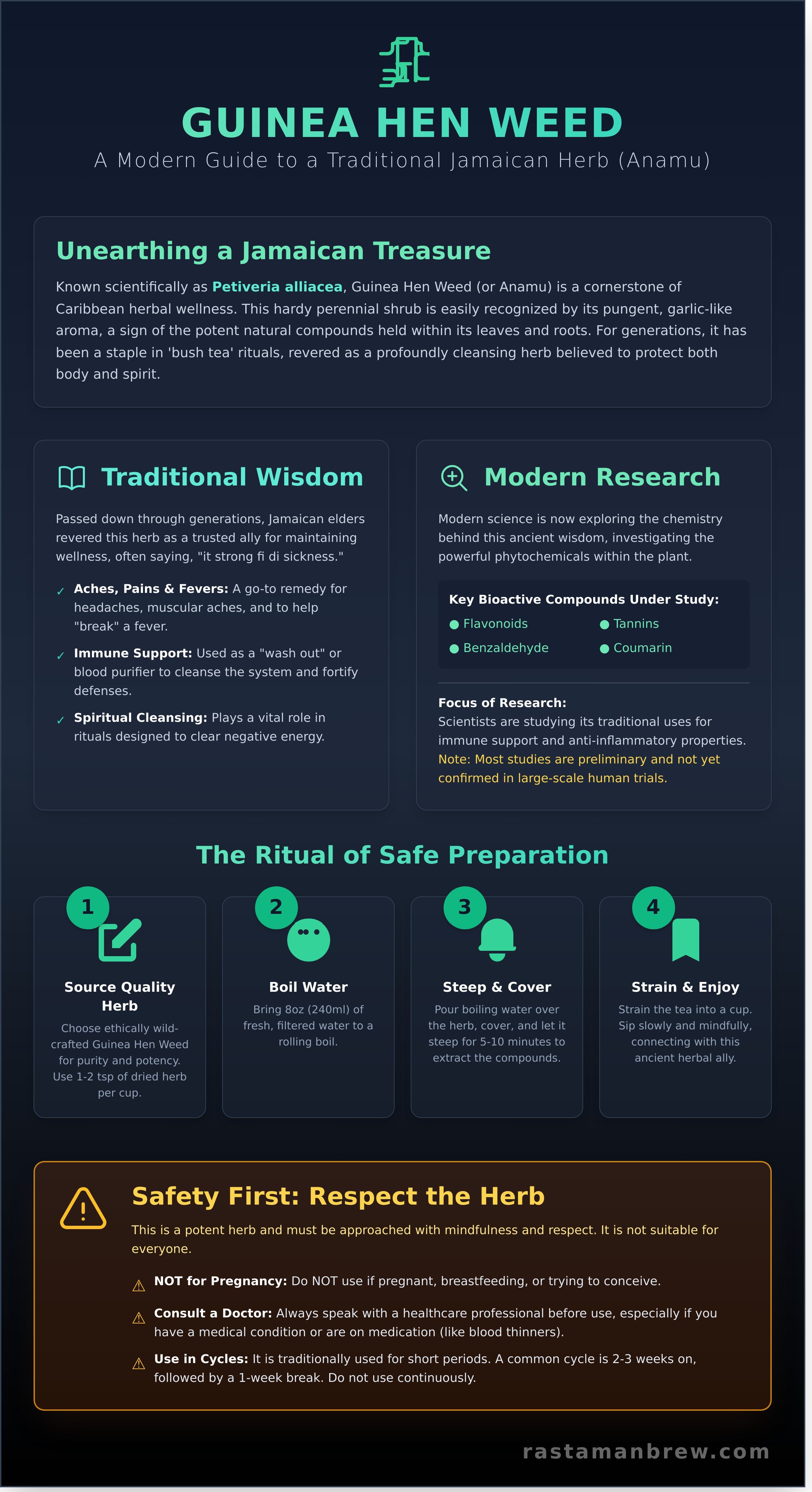
In the lush landscapes of Jamaica and across the Caribbean, a powerful herb grows with deep, ancient roots. Known commonly as Anamu or by its scientific name, Petiveria alliacea, this plant is a cornerstone of traditional herbal wellness. You'll often smell it before you see it; the leaves and roots release a pungent, garlic-like aroma, a sign of the potent compounds held within.
To see this powerful plant in its natural element and learn more about its traditional uses, watch this short video:
This hardy perennial shrub, often found growing wild, is easily recognized by its slender spikes of small, greenish-white flowers. For generations, it has been a staple in 'bush tea' rituals, a time-honored practice of brewing local herbs for health and vitality. Guinea hen weed is revered in traditional medicine as a profoundly cleansing herb, believed to protect the body and spirit.
A Plant with Deep Cultural Roots
Native to the Americas, this herb’s history is woven into the fabric of Caribbean and Latin American culture. Its use extends beyond physical wellness, playing a vital role in spiritual practices and cleansing rituals designed to clear negative energy. In many Jamaican households, knowledge of how to prepare and use this herb is passed down from one generation to the next, a living testament to its enduring significance.
Why is it Gaining Global Attention?
As more people around the world seek natural paths to wellness, the wisdom of traditional herbalism is finding a new audience. The long-standing reverence for this plant is now sparking scientific curiosity, with researchers beginning to investigate the very compounds that have made it a folk medicine treasure. This intersection of ancient knowledge and modern inquiry is revealing why this humble Jamaican herb is truly a gift from nature.
Traditional Uses: The Wisdom of Jamaican Elders
Long before it was studied in modern labs, guinea hen weed was a cornerstone of Jamaican folk medicine. For generations, its pungent, garlic-like aroma filled homes as a sign of healing. Passed down through oral tradition, the knowledge of this powerful herb represents a deep connection to the land and its natural remedies. It was, and still is, a trusted ally for maintaining wellness, often summed up in the local wisdom: "it strong fi di sickness."
A Remedy for Aches, Pains, and Fevers
In traditional Jamaican households, this herb was the first line of defense against common ailments. A warm tea brewed from its leaves was a go-to remedy for easing headaches, soothing muscular aches, and reducing the discomfort of arthritis. When a fever took hold, a potent brew was prepared to help "break" it and comfort the body. While the entire plant is used, elders often teach that the root holds the most concentrated power, reserving it for more serious conditions.
Immune Support and System Cleansing
Beyond treating specific symptoms, guinea hen weed was revered as a profound tonic for the entire body. It was traditionally consumed as a "wash out" or blood purifier, a ritual intended to cleanse the system and fortify the body’s natural defenses against illness. This deep-rooted belief in its ability to fight infections and strengthen vitality is precisely what has inspired so much modern scientific research on anamu, as scientists now seek to understand the chemistry behind this ancient wisdom. This time-honored practice forms the bridge between its ancestral roots and its place in today's wellness rituals.
The Science of Anamu: What Does Modern Research Say?
For generations, traditional healers have understood the wellness potential of Anamu, also known as guinea hen weed. This revered herb has a long history, with a wide range of traditional medicine uses across the Americas. Today, modern science is beginning to explore the wisdom behind these ancient practices, seeking to understand the 'why' behind its folklore. Researchers are isolating powerful phytochemicals within the plant—including flavonoids, tannins, and unique sulfur compounds like Dibenzyl Trisulfide—to uncover the secrets of its natural harmony.
While this journey from ancient root to modern understanding is still unfolding, the initial findings are fascinating. It is vital, however, to approach this research with a mindful perspective. The vast majority of studies are preliminary and have not yet been confirmed in large-scale human trials.
Potential Anti-Inflammatory and Analgesic Effects
One of the most celebrated traditional uses of Anamu is for soothing aches and joint discomfort. This aligns with modern laboratory findings that explore its potential anti-inflammatory properties. Studies suggest that certain compounds in guinea hen weed may help inhibit specific enzymes and pathways in the body that trigger inflammation. While not a cure, this research shows promise in explaining how the plant could support physical comfort and ease, echoing the wisdom of ancient herbal rituals.
Investigating Immune-Modulating Properties
Traditionally brewed into a tea to support the body during colds and infections, Anamu is also gaining attention for its potential immune-modulating properties. Preliminary research indicates that extracts from the plant may help stimulate the activity of certain immune cells, such as lymphocytes and Natural Killer (NK) cells. These cells are essential to the body’s innate ability to defend itself. This research offers a fascinating look at how this ancient herb might support our natural vitality, though more studies are needed to confirm these effects in humans.
This combination of traditional knowledge and modern research is a common theme in the natural wellness industry. For instance, many women seek well-researched supplements to support them through different life stages, such as menopause. For those interested in this particular area of women's health, you can learn more about Nutrahara and its focus on targeted nutritional support.
The Ritual of Safe Preparation: Dosage and Precautions
To work in harmony with powerful botanicals, we must approach them with respect and awareness. The path to wellness with guinea hen weed is paved with mindful preparation, honoring the plant's ancient roots. Understanding how to use this time-honored herb safely is the most important step in unlocking its benefits. This is not just about following a recipe; it's about creating a conscious ritual of care for your body and spirit. Traditionally, it is taken for a set period, followed by a break, allowing the body to rest and integrate its effects.
This principle of mindful health awareness extends beyond herbalism. In our modern world, being proactive also means staying informed about specific health risks, such as drug-resistant bacteria. For those concerned about exposure, especially in healthcare settings, services like mrsatest.co.uk offer private, at-home testing for conditions like MRSA, providing another layer of peace of mind.
How to Brew Guinea Hen Weed Tea Mindfully
Creating a nourishing infusion is a simple, grounding practice. We recommend starting with one cup per day to allow your body to attune to the herb's unique energy. This mindful approach is central to traditional herbalism.
- Step 1: Measure 1-2 teaspoons of dried herb per cup (8 oz) of fresh, filtered water.
- Step 2: Bring your water to a rolling boil, then pour it directly over the leaves in a mug or teapot.
- Step 3: Allow the tea to steep for 5-10 minutes. A shorter steep yields a milder flavor, while a longer one creates a more potent and deeply earthy brew.
- Step 4: Strain the leaves from the water and serve warm.
Be present with the experience. The tea has a distinct, pungent aroma and flavor that many find similar to garlic—a true taste of its potent, wild-crafted origins. You can add a touch of raw honey or a squeeze of lime to soften its strong character if you wish.
Who Should Avoid This Herbal Ally?
Part of honoring any plant ally is knowing its boundaries. The same properties that make guinea hen weed powerful also mean it is not suitable for everyone. Please review these precautions carefully to ensure your wellness journey is a safe and harmonious one.
- Absolutely avoid if you are pregnant, trying to conceive, or breastfeeding, as it may cause uterine contractions.
- Use with caution if you have a known blood disorder or are taking blood-thinning medications (anticoagulants), as it may enhance their effects.
- If you have hypoglycemia or diabetes, consult your healthcare provider before use, as it may lower blood sugar levels.
For any herbal ritual, purity is key. The quality of your herbs directly impacts their safety and efficacy. For authentic, wild-crafted botanicals, always choose a trusted source like Rastaman Brew.
Sourcing Quality Guinea Hen Weed for Your Ritual
Your journey with any herbal remedy is only as pure as its source. When you welcome a powerful plant like guinea hen weed into your wellness ritual, its origin is critical. The soil it grows in, the air it breathes, and the hands that harvest it all contribute to its final potency and safety. A thoughtfully sourced herb is free from contaminants like pesticides and heavy metals, ensuring you receive only the plant’s intended natural benefits.
To ensure you are getting a high-quality product, look for a supplier that values transparency and tradition. Key indicators of a trustworthy source include:
- Ethical Harvesting: The herb should be either certified organic or ethically wild-harvested in a way that respects the plant and its ecosystem.
- Purity Testing: Reputable brands test their herbs for contaminants to guarantee what’s on the label is what’s in the package.
- Authentic Origin: Sourcing from the plant’s native environment, like the lush landscapes of Jamaica, often yields a more potent and authentic product.
Wildcrafted vs. Cultivated: Why It Matters
Wildcrafting is the time-honored practice of harvesting plants from their natural habitat. Unlike cultivated herbs grown in controlled settings, wild plants must adapt to thrive, often developing a more complex and potent profile. This connection to the wild earth is what gives an herb its true vitality. Ethical wildcrafting honors this relationship, ensuring that harvesting is done sustainably to protect the plant for future generations and preserve the balance of nature.
Embrace Jamaican Wellness with Rastaman Brew
At Rastaman Brew, our mission is to connect you with the ancient roots of Jamaican herbal wisdom. We honor the traditions behind each plant we offer by sourcing only the finest, wild-crafted herbs directly from Jamaica. Our guinea hen weed is a reflection of this commitment—pure, potent, and handled with the utmost respect from root to brew. We serve as your trusted guide, making these powerful natural remedies accessible for your modern wellness rituals.
Ready to experience the authentic essence of Jamaican herbalism? Begin your journey into natural wellness at RastamanBrew.com.
Embrace the Ancient Wisdom of Anamu
From the verdant hills of Jamaica to the forefront of modern wellness, the journey of guinea hen weed is a testament to nature’s enduring power. This remarkable herb bridges the gap between the ancient wisdom of traditional healers and the curiosity of contemporary science, offering a rich history of use for holistic balance. As we've seen, honoring this plant involves not just understanding its potential benefits, but also embracing the mindful ritual of safe preparation and dosage. This respect is key to unlocking its true essence and integrating it harmoniously into your wellness practice.
If you feel called to connect with this time-honored tradition, the purity of your source is paramount. At Rastaman Brew, we honor the plant from root to brew, ensuring our product is a true reflection of its heritage. Explore our authentic, wildcrafted Guinea Hen Weed, consciously and sustainably sourced from Jamaica. Each batch is 100% organic and wild-crafted, allowing you to experience a genuine part of a time-honored wellness tradition.
May your journey toward inner harmony be guided by the purity of nature.
Frequently Asked Questions
What does Guinea Hen Weed do for the body?
Guinea Hen Weed is revered in Jamaican herbal tradition for its powerful cleansing properties. It is traditionally used to support the body's natural immune response and promote cellular health. Many embrace this ancient root to help reduce inflammation, purify the blood, and restore a sense of inner balance. It serves as a holistic tool for maintaining overall wellness and vitality, connecting your modern ritual to time-honored plant wisdom.
Can you drink Guinea Hen Weed tea every day?
While deeply beneficial, this is a potent herb best used with intention. We recommend enjoying it in cycles, such as for a few weeks at a time, followed by a break. This mindful approach allows your body to fully receive its benefits without being overwhelmed. Always listen to your body’s wisdom. For personalized guidance, it is best to consult with a healthcare provider or a knowledgeable herbalist before daily use.
What are the side effects of Guinea Hen Weed?
As a potent natural herb, it should be used with awareness. Guinea Hen Weed may have blood-thinning effects, so it should be avoided by those on anticoagulant medication. It is not recommended for pregnant or breastfeeding women. Some individuals may experience mild headaches. We always suggest starting with a small amount to see how your body responds and consulting your doctor before beginning any new herbal regimen.
What does Guinea Hen Weed tea taste like?
The taste of Guinea Hen Weed tea is as unique as its benefits. It has a strong, earthy, and pungent flavor profile with distinct peppery or garlicky notes, which is a direct reflection of its potent compounds. Many find that adding a touch of honey or a slice of lime can soften its robust character, creating a more balanced and palatable wellness brew for their daily ritual.
Is Guinea Hen Weed the same as Anamu?
Yes, they are two names for the same powerful plant, whose botanical name is Petiveria alliacea. In Jamaica and across the Caribbean, it is widely known as Guinea Hen Weed. In Spanish-speaking regions, it is commonly called Anamu. Though the names differ by region, the plant and its time-honored wellness properties remain the same, connecting diverse cultures through a shared respect for this ancient root.
How long does it take for Guinea Hen Weed to work?
The journey with any natural herb is personal. Some may notice subtle shifts in their well-being within a few days of consistent use, while for others, it may take a few weeks to experience more profound benefits from guinea hen weed. The key is a consistent and mindful ritual. Allow the plant’s wisdom to gently integrate with your body’s natural rhythms for the best results.
Where can I buy authentic Jamaican Guinea Hen Weed?
To experience its true essence, it is vital to source authentic Jamaican guinea hen weed. Look for suppliers who honor tradition by offering wild-crafted or organically grown herbs directly from the island. At Rastaman Brew, we are dedicated to this purity. Our herbs are sourced from their natural habitat in Jamaica, ensuring you receive a product that is pure, potent, and deeply connected to its ancient roots.


