
What if the bitterness in your morning cup isn't the herb's fault, but a missed step in an ancient ritual? You likely value the quiet moments a warm mug provides, yet it's frustrating when your delicate chamomile or wildcrafted Jamaican herbs turn out weak or unpleasantly sharp. Finding the best way to brew loose leaf herbal tea shouldn't feel like a complex chemistry experiment.
We're here to help you master the art of botanical extraction. By learning how to properly draw out the essence of your plants, you can unlock the full healing potential and vibrant flavor of every leaf and root. It's a return to a grounded, intentional practice that honors the plant's journey from the soil to your spirit.
This guide explores the essential differences between infusions and decoctions. We will clarify the precise temperatures your herbs crave and show you the simple tea accessories needed for a perfect steep. Let's transform your daily cup into a restorative sanctuary of wellness.
Key Takeaways
- Understand why whole, un-crushed botanicals are essential for preserving the therapeutic oils that standard tea bags often lose.
- Discover how selecting pure tea accessories like glass or ceramic protects the integrity of your botanical infusion from unwanted flavors.
- Master the best way to brew loose leaf herbal tea by aligning your steeping time and temperature with the specific needs of each plant.
- Honor ancestral wisdom by learning the difference between gentle infusions for petals and slow decoctions for hardy Jamaican roots.
- Transform your daily practice into a restorative ritual that uses the brewing process as a bridge to inner tranquility and presence.
Why Loose Leaf Herbal Tea is the Superior Choice
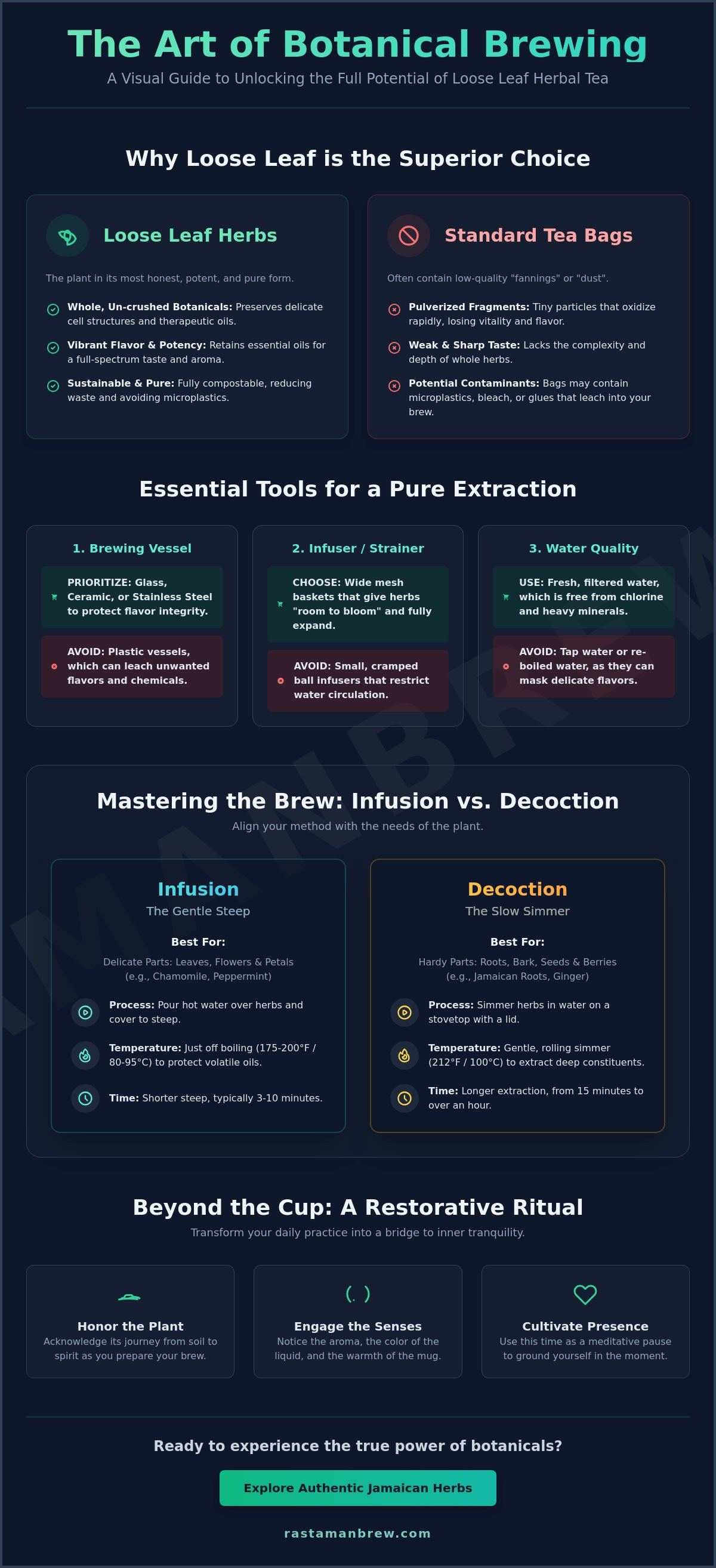
Loose leaf herbal tea represents the plant in its most honest form. It's composed of whole, un-crushed botanicals, not the pulverized fragments found in mass-produced alternatives. When herbs remain intact, they preserve their delicate cell structures. This is the secret to a truly vibrant cup. Whole leaves have less surface area exposed to the air. This reduced exposure means they retain their essential oils and volatile compounds far longer than the tea dust found in common bags. When you choose whole herbs, you're choosing a more potent, living essence that stays fresh until the moment it meets hot water.
Standard tea bags often contain fannings, which are essentially the leftovers of the tea industry. These tiny particles oxidize rapidly, losing their vitality and medicinal properties long before they ever reach your kitchen. In contrast, brewing whole herbs offers a profound sensory connection to the earth. You can see the curl of the leaf, identify the petals, and smell the authentic aroma of the wild. This clarity and purity are key reasons why many consider this the best way to brew loose leaf herbal tea. Herbal infusions made from whole plants deliver a complexity that bags cannot mirror. To better understand this concept, watch this helpful video:
The Botanical Integrity of Whole Herbs
Intact plants hold onto their healing wisdom. When a leaf is crushed, its volatile compounds begin to vanish. Wildcrafted herbs often possess a higher nutrient density than mass-produced varieties because they grow in mineral-rich environments. This commitment to botanical purity is a hallmark of an authentic Jamaican herbal store. Sourcing herbs that respect traditional lineage ensures every sip carries the strength of the soil. It's the best way to brew loose leaf herbal tea for true wellness.
Sustainability and Environmental Connection
Your tea ritual should nourish the planet as much as your spirit. Many standard tea bags contain microplastics or bleached paper that can leach into your water during steeping. Pure organic botanicals are entirely compostable, returning to the earth to feed future growth. Choosing loose leaf is a quiet act of intention. It reduces waste and fosters a deeper bond with the natural world. This practice turns a simple drink into a mindful choice for a more balanced life.
Essential Tools for a Pure Botanical Extraction
The vessel you choose acts as the cradle for your botanical journey. To honor the purity of wildcrafted herbs, prioritize materials like glass, ceramic, or high-grade stainless steel. These inert surfaces don't leach chemicals or metallic tangs into your brew. Plastic, even if BPA-free, can absorb old flavors and release microplastics when exposed to high heat. A clear glass teapot allows you to witness the visual transformation of the herbs, deepening your connection to the plant's origin. Choosing the right material is a fundamental part of the best way to brew loose leaf herbal tea.
Choosing Your Infuser or Strainer
Your herbs need space to breathe. While small ball infusers are common, they often cramp the leaves, preventing them from fully unfurling. A wide mesh basket that sits inside your mug or teapot is far superior. This "room to bloom" ensures that water circulates around every part of the botanical, extracting the full spectrum of oils and nutrients. If you're using a French press, be mindful of the timing to avoid bitterness. For those seeking a more dedicated ritual, exploring high-quality tea accessories can elevate your daily practice from a simple task to a sacred pause.
Water Quality: The Silent Ingredient
Water is the medium through which the plant's spirit speaks. Using tap water can introduce chlorine or heavy minerals that mask the delicate notes of your herbal tea. Filtered water is essential for a clean extraction. It allows the polyphenols to dissolve properly without reacting to excess calcium or magnesium. Avoid the habit of re-boiling the same water in your kettle. Fresh water contains higher oxygen levels, which helps the flavors dance. Understanding the difference between infusions and decoctions is vital here, as different tools might be needed for a gentle steep versus a vigorous simmer.
Modern temperature-controlled kettles provide precision for delicate flowers, yet a traditional stovetop pot remains the classic choice for simmering hardy Jamaican roots. The goal is consistency and presence. When you pair the right tools with high-quality ingredients, you create a bridge between ancient wisdom and your modern life. You'll find that your body responds more deeply when the extraction is pure and intentional. If you're ready to begin your ritual, consider starting with our collection of wildcrafted herbs to experience the difference for yourself.
Mastering the Perfect Steep: A Step-by-Step Guide
The best way to brew loose leaf herbal tea is to treat the process as a conversation with the plant. It begins with precise measurement and quiet intention. Start by measuring 1 to 2 teaspoons of your chosen herbs for every 8 ounces of water. This ratio ensures a robust profile that honors the herb's potency. Heat your water until it's just off the boil, reaching approximately 208°F. As you pour the water over the dry botanicals, you'll see them begin to stir and dance. This movement awakens the plant's essence. Immediately cover your vessel with a lid or saucer. This simple act is vital because it traps the essential steam and volatile oils that carry the tea's healing properties. After the appropriate time, strain the infusion and enjoy it at its peak.
Many people rush the process, yet the best way to brew loose leaf herbal tea requires a bit of stillness. When you leave your cup uncovered, you lose the very compounds that provide aroma and wellness benefits. Think of the steam as the spirit of the herb; you want to keep that spirit inside the cup. Once the steeping is complete, the color should be deep and the scent should be inviting. Straining promptly prevents the tea from becoming over-extracted or losing its balance. This method ensures every sip is as restorative as the last.
The Golden Rules of Steeping Time
Timing is the bridge between a weak cup and a perfect infusion. Delicate flowers like hibiscus or chamomile require only 5 minutes to release their soft, floral notes. Leafy herbs such as fever grass or mint need more time to share their wisdom, usually between 7 and 10 minutes. If you're using medicinal Jamaican teas, following these specific windows ensures you don't miss the therapeutic benefits. As the saying goes, "Patience is the final ingredient in a potent brew."
Temperature Matters for Herbal Purity
Water that's too hot can scorch delicate petals, resulting in a flat or charred flavor. If you don't have a thermometer, look for the "fish eye" bubbles. These are small, steady bubbles that appear just before a rolling boil. This is the ideal temperature for most herbal teas. If your water reaches a violent, rolling boil, simply let it sit for two minutes to cool. This slight pause protects the botanical integrity of your wildcrafted herbs and ensures a smooth, clean finish in every cup.
Infusion vs. Decoction: Honoring Different Jamaican Herbs
To truly honor the plant, you must understand its physical nature. Infusion is the gentle art of steeping soft tissues like leaves and flowers in hot water. This method preserves delicate scents and fragile compounds that high heat might destroy. In contrast, decoction is the traditional method of simmering hard roots and barks to release their deep-seated wisdom. Many Jamaican "Bush Teas" rely on this more vigorous approach to unlock nutrients. When you work with woody materials, a simple steep isn't enough. Learning these distinctions is the best way to brew loose leaf herbal tea with authentic results.
Jamaican traditions often involve a slow simmer on the stove rather than a quick steep in a mug. This isn't just about heat; it's about time and respect for the herb's physical structure. If you're exploring specific Jamaican herbs, you'll find that roots require a different level of commitment than petals. A gentle simmer coaxes out the minerals and alkaloids that a quick pour would miss. It's a grounded practice that connects you to the island's ancestral healing methods. You'll notice the liquid change from clear to a rich, earthy hue as the plant shares its strength.
When to Simmer: The Art of Decoction
Hardy botanicals like Chaney Root or Quassia Wood possess tough, fibrous exteriors that protect their medicinal properties. To access their benefits, you must simmer them in water for 15 to 20 minutes on low heat. This process, known as decoction, breaks down the woody cell walls that a standard infusion cannot penetrate. It transforms clear water into a dark, potent tonic that carries the full weight of the herb's heritage. Without this sustained heat, these "woody" botanicals remain silent, and their potential stays locked away. You can explore our selection of medicinal herbs to find authentic roots for your next decoction.
The 'Sun Tea' Method for Gentle Extraction
Sometimes, the best energy for your brew comes from the sky rather than the stove. The sun tea method uses solar warmth for a slow, cold-brew style extraction that is incredibly gentle. Place light herbs like Hibiscus or Lemongrass in a glass jar of filtered water and set it in a sunny spot for several hours. This method creates a soft, nuanced flavor profile that avoids any hint of bitterness. It also fosters a spiritual connection to the sun's natural energy, making it a wonderful way to practice mindfulness. It's a beautiful way to slow down and let the environment guide the best way to brew loose leaf herbal tea.
Beyond the Cup: Integrating the Tea Ritual into Your Life
Brewing tea is not a chore to be completed; it's an invitation to be fully present. While your herbs steep, you have a natural five-minute window for meditation. Instead of reaching for your phone, watch the steam rise and swirl. Focus on the subtle aroma as it fills your space. This intentional pause is truly the best way to brew loose leaf herbal tea because it prepares your mind to receive the plant's benefits. Mindful sipping allows you to notice the warmth of the ceramic and the shifting notes of the flavor profile. It transforms a simple beverage into a restorative sanctuary that stays with you long after the cup is empty.
Creating a Calm Morning Ritual
Your morning sets the tone for your entire day. As the water begins to heat, take a moment to breathe and set a clear intention. Perhaps you seek clarity or a sense of grounded strength for the hours ahead. Choosing the right herb is essential for this early energy. Bright lemongrass or invigorating ginger can provide a natural lift without the harshness of modern stimulants. The act of awakening the leaves with hot water mirrors your own awakening to the world. By treating this process with respect, you cultivate a sense of peace that carries through your morning tasks. It's a way to honor the botanical purity of the plants you've chosen to nourish your body.
Evening Wind-Down with Jamaican Botanicals
In the quiet of the evening, your tea ritual serves as a powerful signal. It tells your body and spirit that the day's labor is finished. Traditional evening herbs like sarsaparilla or chamomile offer a gentle path toward tranquility and internal balance. This transition is vital for holistic well-being. It allows you to shed the stress of a busy day and prepare for deep, restorative rest. We invite you to join us on this shared journey toward better health. Exploring a premium loose leaf wellness tea guide can help you discover the perfect blends for your nightly rest. This practice bridges the gap between ancestral wisdom and your contemporary life.
Embracing these practices turns a daily habit into a sacred bridge. The best way to brew loose leaf herbal tea is to let the plant guide you back to yourself. Whether you're simmering roots in the traditional Jamaican way or steeping delicate petals, do it with presence. Our collection of organic teas and wildcrafted herbs is here to support your practice. Let each cup be a reminder that wellness is a continuous, beautiful journey. We are honored to walk this path with you, one mindful sip at a time.
Embark on Your Botanical Journey
You now hold the keys to a deeper connection with the plant kingdom. By distinguishing between the gentle steep of an infusion and the steady simmer of a decoction, you honor the unique spirit of every herb. Remember that pure tools and filtered water are the silent partners in your wellness practice. This intentionality is the best way to brew loose leaf herbal tea for both vibrant flavor and therapeutic strength.
Your kitchen can become a sanctuary of tranquility. As you integrate these steps into your life, you'll find that the tea serves the mind and spirit as much as the body. Our blends carry ancestral wisdom in every leaf and root. We offer organic, wildcrafted Jamaican herbs that are sustainably sourced to ensure botanical purity. Each selection is a bridge between the island's rich healing heritage and your own modern quest for internal balance.
Explore our collection of authentic Jamaican Loose Leaf Teas and start your ritual today. Your journey toward holistic well-being begins with a single, mindful pour. We're honored to walk this path of discovery with you.
Frequently Asked Questions
How much loose leaf herbal tea should I use per cup?
Use one to two teaspoons of dry botanicals for every eight ounces of water. This ratio ensures a potent extraction that honors the plant's essence and therapeutic profile. If you desire a stronger tonic, it's better to increase the herb amount rather than the steeping time to avoid any potential bitterness.
Can I reuse loose leaf herbal tea for a second steep?
You can often reuse high-quality herbs for a second infusion. While the first steep releases the most volatile oils, the second cup can offer a subtler, more delicate experience. This practice respects the plant's entire lifecycle and encourages a sense of discovery as the flavor notes shift and evolve.
What is the best water temperature for brewing herbal tea?
The best way to brew loose leaf herbal tea involves using water heated to approximately 208°F. This "just off the boil" temperature is hot enough to extract minerals without scorching delicate petals or leaves. If you don't have a thermometer, let your kettle rest for about two minutes after it reaches a rolling boil.
How do I brew loose leaf tea without a strainer or infuser?
You can brew your herbs directly in a mug using the traditional "grandpa style" method. Simply let the leaves settle to the bottom of the cup and sip slowly from the top once the infusion is ready. Alternatively, you can use a small saucer to hold the herbs back while pouring the liquid into a second vessel.
Does herbal tea expire or lose its potency over time?
Dried herbs don't expire in a dangerous sense, but they do lose their therapeutic potency and aromatic vibrancy over time. Most wildcrafted botanicals are best used within one to two years of their harvest date. Store your herbs in a cool, dark place in airtight glass jars to preserve their essential oils and spiritual energy.
Is it better to cover the tea while it is steeping?
Always cover your tea while it steeps to trap the essential steam and volatile oils. These compounds carry the medicinal properties and the true botanical aroma of the plant. A simple lid or saucer ensures that the healing wisdom of the herb stays inside your cup rather than escaping into the air as vapor.
What is the difference between an infusion and a decoction?
Infusions are gentle steeps for delicate parts of the plant like leaves and flowers, while decoctions involve simmering hardy roots and barks. This distinction is vital for unlocking the full potential of different botanical structures. Choosing the correct method for your specific ingredients is a core part of the best way to brew loose leaf herbal tea.
Should I add sweeteners like honey to my herbal tea?
Adding a small amount of raw honey or agave is a personal choice that can complement certain earthy or bitter notes. However, try tasting the brew in its pure state first to connect with the authentic flavor of the earth. Pure botanicals often possess a natural sweetness that reveals itself more clearly as the tea cools slightly.


