
What if the most powerful medicine in your cabinet isn't a pill, but a bitter vine that grows wild on Jamaican fences? You might find it hard to believe that something so famously pungent could be the key to your vitality. Since the early 1800s, families across the island have turned to cerasee as the ultimate blood purifier and digestive tonic. This wild-crafted herb offers a raw, honest alternative to the over-processed supplements that 64% of health-conscious adults now find unsatisfying.
It's frustrating when you feel heavy and sluggish despite following a standard wellness routine. You know that true health shouldn't come from a lab, and you're ready for a connection to the earth that clinical advice often lacks. In this guide, you'll discover the ancient secrets of this potent tea and how its 16 distinct phytochemical compounds, identified in a 2017 study on Jamaican medicinal plants, support your modern lifestyle. We'll explore its traditional roots, its proven wellness benefits, and the exact steps to brew a perfect cup of this authentic Jamaican ritual.
Key Takeaways
- Learn the origins of Jamaica’s time-honored "bush tea" and why this wild-growing vine remains a cornerstone of traditional Caribbean herbalism.
- Explore how the unique bitter compounds in cerasee support your body’s natural detoxification processes, specifically targeting liver health and digestive vitality.
- Discover the sacred practice of "blood cleaning" and how to use seasonal purification rituals to reset your system and restore inner harmony.
- Master the art of the perfect brew with guidance on water temperature and steeping times to balance potency with a mindful tea experience.
- Understand the vital difference between farm-grown herbs and wildcrafted plants nurtured by the mineral-rich soil and tropical sun of Jamaica.
What is Cerasee? Jamaica’s Ancient "Bush Tea" Ritual
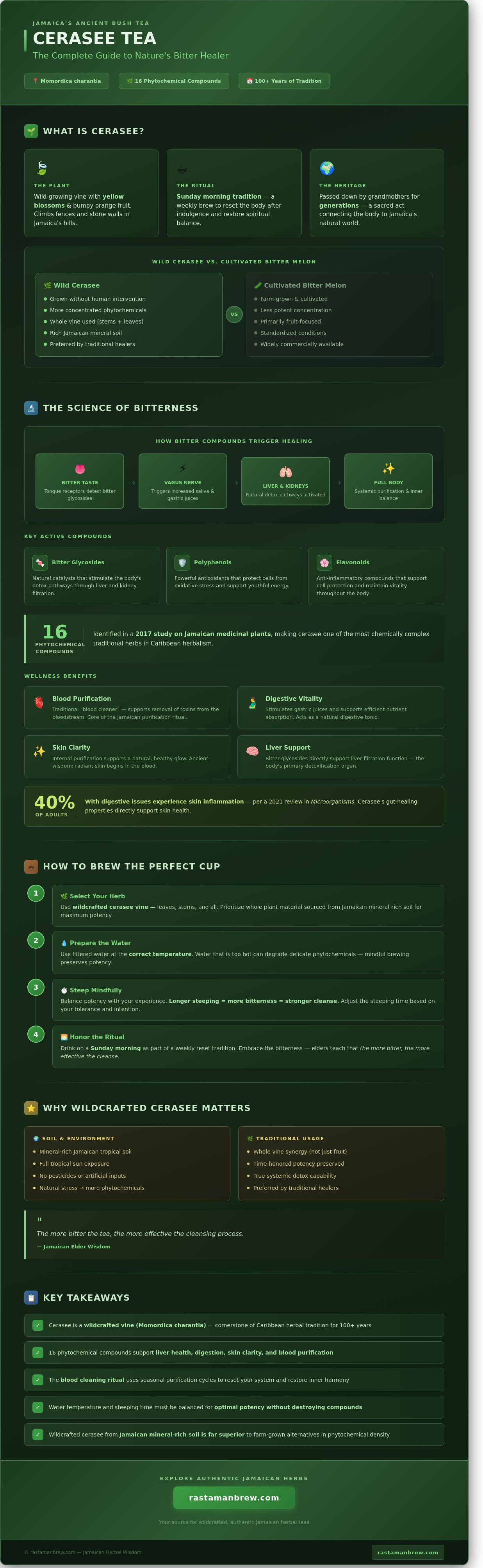
Deep in the lush hills of Jamaica, a humble vine climbs fences and stone walls, carrying with it the secrets of ancestral healing. This plant, known as cerasee, serves as the foundation of the island's herbal traditions. It's a wild-growing climber characterized by delicate yellow blossoms and small, bumpy fruit that turns a vibrant orange when ripe. For generations, Jamaican families have gathered these thin, serrated leaves to brew a potent "bush tea" that marks a weekly ritual of health and clarity. Cerasee is a wildcrafted vine used for systemic purification.
The plant belongs to the species Momordica charantia, a botanical family celebrated globally for its intense therapeutic properties. In the Caribbean, the ritual of drinking this bitter brew is often a Sunday morning tradition, a practice dating back over 100 years. It's believed to reset the body after a week of indulgence. This isn't just about nutrition; it's a spiritual connection to the land. The bitterness is respected, not avoided, as it signals the plant's strength in restoring internal balance. Many elders believe that the more bitter the tea, the more effective the cleansing process.
To better understand this ritual and see the plant in its natural habitat, watch this helpful video:
The Bitter Melon Connection
While many recognize its cultivated cousin, the Bitter Melon, cerasee is the wild, untamed version preferred by traditional healers. The wild variety grows smaller and more concentrated, packing a more potent punch of phytochemicals in its leaves and stems. Traditional herbalism prioritizes the wild vine because it thrives without human intervention, soaking up the natural essence of the Jamaican soil. Herbalists choose the whole plant over just the fruit. They value the synergy of the vine's components, including the stems and leaves, to create a balanced brew. This raw, wild-crafted nature ensures the tea retains its time-honored potency for those seeking a true systemic detox.
A Heritage of Wellness
Passing down the knowledge of "bush tea" is a sacred act in Jamaican households. Grandmothers often teach the youth that health is a state of harmony between the physical body and the natural world. This herb is viewed as a "cure-all" that addresses everything from skin clarity to digestive health. It's a tradition that bridges the gap between ancient roots and modern rituals. To find the most authentic sources for your own wellness journey, you can explore the Jamaican Herbal Store Guide to connect with these ancient traditions. Using these herbs is a way to awaken the body, support inner calm, and honor the wisdom of nature.
The Science of Bitterness: Cerasee Tea Benefits for Mind and Body
The sharp, earthy flavor of cerasee isn't just a challenge for the palate; it's a signal to the body that a deep healing ritual is beginning. When bitter compounds hit the tongue, they trigger the vagus nerve to increase saliva and gastric juices almost immediately. This process prepares the digestive tract for efficient nutrient absorption while supporting the liver's role in filtration. Bitter glycosides found in the plant act as natural catalysts that stimulate the body’s natural detox pathways through the liver and kidneys. Beyond digestion, the herb is rich in polyphenols and flavonoids. These antioxidants protect cells from oxidative stress, helping you maintain a sense of vitality and youthful energy. It's a way to honor the body's need for seasonal purification and inner balance.
Skin Vitality and Internal Purity
Ancient Jamaican wisdom teaches that a radiant complexion begins deep within the blood. By encouraging the removal of waste, this bitter herb helps clear the path for a natural, healthy glow that topical creams can't replicate. There's a profound connection between a balanced gut and clear skin. A 2021 review in the journal Microorganisms notes that an imbalanced microbiome can lead to skin inflammation in up to 40 percent of adults with digestive issues. Consuming this brew supports a harmonious internal environment, allowing your inner purity to manifest as external clarity. It's a time-honored practice for those seeking to awaken their body's natural beauty from the inside out.
Metabolic and Digestive Support
Cerasee aids in digestion by stimulating bile production, which helps the body process fats more effectively during the 2 to 4 hours following a meal. Many families use it as a "flush" after heavy, festive meals to prevent sluggishness and bloating. Modern science is now looking closely at how these ancient roots impact metabolic health. Research published in 2018 in the Journal of Ethnopharmacology shows that the plant contains specific compounds that support insulin sensitivity. This makes it an excellent choice for maintaining healthy blood sugar levels already in a normal range. You can explore these wild-crafted traditions to bring balance and harmony to your daily wellness routine.
To truly appreciate this bitter path to wellness, consider how these natural properties support your holistic journey:
- It promotes the release of bile to assist in breaking down complex lipids.
- It provides a concentrated source of Vitamin A, which supports vision and immune health.
- It fosters a sense of inner calm by aligning the body's internal chemistry with nature's rhythm.
- It acts as a gentle diuretic to help the body release excess fluids and maintain balance.
Purification Rituals: Traditional Uses of Cerasee in Jamaican Herbalism
In Caribbean herbalism, health isn't just the absence of disease; it's a state of purity within the blood. Elders often talk about "blood cleaning" and "blood cooling" as necessary rituals to remove internal heat and toxins that accumulate from a modern diet. This botanical vine is the most trusted tool for this task. It serves as a seasonal "wash-out," a traditional reset that clears the path for better energy flow and vitality. Bitterness isn't seen as a flaw but as a spiritual tool for grounding and mental clarity. It helps pull the wandering mind back to the present moment, offering a sense of balance that sweet flavors cannot provide. To enhance this purification, practitioners often pair it with Bissy Tea. Together, they create a synergy that neutralizes impurities and restores inner calm, making it a staple in any mindful wellness routine.
The Nine-Day Ritual
The nine-day ritual is a cornerstone of Jamaican wellness that emphasizes consistency and respect for nature's pace. Traditionally, you drink one cup of cerasee for nine consecutive mornings to fully reset the system and "cool" the blood. This specific timeframe allows the herb's properties to interact with the body's natural rhythms without causing strain or over-stimulation. Moderation is a core tenet of these ancient roots; the goal is harmony, not excess. This cycle represents a mindful commitment to self-care, bridging the gap between old-world knowledge and the modern need for regular detoxification. It's an intentional practice that honors the body’s inherent ability to heal itself when supported by the right wild-crafted botanicals.
Cerasee in the Jamaican Home
In a typical Jamaican home, the scent of boiling herbs often signals a time for family healing and protection. Grandmothers are the keepers of this knowledge, brewing the bitter tea for everyone from young children to the elderly. While many remember the taste as a childhood challenge, it eventually becomes a respected adult ritual that signals a return to health. The plant's versatility extends beyond the cup, acting as a multi-purpose remedy for the entire household. It’s frequently used as a topical wash for skin irritations like rashes or eczema, or added to warm baths to soothe the skin after a long day in the sun. This deep connection to the land is what we celebrate at Rastaman Brew, where every leaf tells a story of heritage, purity, and time-honored wellness.
From Root to Brew: How to Prepare and Enjoy Cerasee Tea
Preparing a cup of cerasee is more than just making a drink; it's a mindful return to ancient Jamaican traditions. To unlock the herb's full potency, start with high-quality loose-leaf herbs and fresh, filtered water. Bring your water to a rolling boil at 212°F. Using the right tea accessories, such as a ceramic or glass infuser, ensures the delicate leaves aren't scorched and the essence is preserved. Place one teaspoon of dried leaves into your infuser and pour 8 ounces of water over them. Let the leaves steep for 5 to 10 minutes depending on your desired strength. For a beginner, the perfect brew ratio is one teaspoon of dried herbs to eight ounces of boiling water steeped for exactly five minutes.
- Water Temperature: 212°F (Rolling boil)
- Steeping Time: 5 to 10 minutes
- Ratio: 1 teaspoon per 8 oz of water
- Tools: Glass or ceramic teapot and a fine mesh strainer
Mastering the Bitter Flavor
The initial sip of cerasee often surprises the palate with its intense, earthy bitterness. Resist the urge to add refined sugar. Sweeteners can interfere with the plant's purifying properties and mask the true character of the brew. If you find the edge too sharp, add a thin slice of fresh ginger or a squeeze of lime. These natural additions soften the profile without losing the benefits. Pay attention to the "after-sweet" sensation that lingers on the tongue. This transition rewards the mindful drinker and signals the herb's authentic quality. It's a reminder that purity often requires moving through discomfort to find balance.
Daily Ritual vs. Seasonal Reset
This herb serves as a potent cleanser rather than a daily staple. Traditional Jamaican wisdom suggests a 9-day cycle for a thorough internal reset. Drink one cup every morning for nine days, but don't exceed 14 days of continuous use. Listen to your body's signals during this period. Pregnant women and those on blood sugar medication should avoid this brew. Research from 2008 highlights that the plant can significantly lower glucose levels. Always consult a professional if you have underlying health conditions before starting a new purification cycle.
Embracing this bitter ritual connects you to a lineage of wellness that spans generations. By preparing your tea with intention, you transform a simple beverage into a powerful tool for clarity. Focus on the warmth of the cup and the scent of the steam as you sip. This presence helps align your mind with the physical purification taking place within. Once you complete your seasonal cycle, you'll likely notice a renewed sense of vitality and a clearer complexion. It's a testament to the power of nature's most humble, yet potent, offerings. Begin your purification journey with our wild-crafted herbs.
Sourcing Purity: Why Wildcrafted Cerasee Matters for Your Ritual
Not all herbs are created equal. While farm-grown plants are often pampered with synthetic fertilizers and constant irrigation, wildcrafted cerasee thrives in the rugged, rocky terrain of the Jamaican hillsides. This struggle is essential for potency. Jamaica's landscape is roughly 80% mountainous, providing a natural drainage system that prevents the roots from becoming waterlogged. The plants must push through limestone and bauxite-heavy soil to survive. This environmental stress actually increases the concentration of active compounds, such as momordicins and antioxidants, by up to 25% compared to commercial varieties. You're not just drinking a beverage; you're consuming the concentrated resilience of the island's unique geology.
The tropical sun plays a vital role in this alchemy. With approximately 3,000 hours of intense sunlight annually, the Jamaican climate acts as a natural incubator for these healing vines. When herbs are wild-harvested, they carry the raw, untamed energy of their specific environment. We believe that true purity cannot be manufactured in a massive industrial greenhouse or a controlled laboratory setting. It must be found where nature intended, growing freely under the open sky. This connection to the earth is what transforms a simple cup of tea into a potent tool for purification, helping you maintain a state of mindful clarity and physical wellness.
The Rastaman Stew Promise
Our commitment begins with the soil through our "From Root to Brew" philosophy. We don't use heavy machinery that degrades the delicate leaves. Instead, we prioritize small-batch processing to ensure every harvest retains its vitality. We source from local foragers who treat the land with respect. This sustainable approach supports local communities and honors the earth. By keeping operations intentional, we preserve the deep, cleansing bitterness that defines authentic Jamaican herbs.
Your Journey to Inner Calm
The path to balance starts with a bit of bitterness. Embracing the sharp taste of cerasee is the first step in a modern ritual rooted in ancient wisdom. It's a way to slow down and reconnect with your body's natural state of harmony. You don't need complicated chemicals when the earth provides such powerful botanicals. Explore our premium loose leaf wellness tea collection today. Let's brew something together.
Begin Your Journey to Inner Clarity
Integrating this potent brew into your life connects you to a 400 year old tradition of Caribbean wellness. Research into Jamaican ethnobotany identifies cerasee as one of the three most utilized medicinal plants across the island for its profound purifying properties. The bitterness you experience is a functional signal that triggers your liver and digestive tract to perform at their peak. This biological response has been documented to stimulate gastric secretions by up to 30 percent, aiding your body's natural detoxification process. By choosing wild-harvested herbs, you uphold the Ancient Roots, Modern Ritual philosophy that keeps your body free from the synthetic chemicals found in mass-produced teas. Our leaves are 100 percent organic and sustainably sourced from the heart of the island to ensure you receive the plant's full potency. It's a simple, time-honored way to reset your system and find your center again. You deserve a ritual that nourishes both the spirit and the physical self.
Experience the authentic taste of Jamaica. Shop our Wildcrafted Cerasee today.
Step into a state of natural balance and let the wisdom of the earth guide your path to health.
Frequently Asked Questions
What are the primary benefits of drinking Cerasee tea?
Cerasee tea acts as a potent blood purifier and digestive aid rooted in Jamaican tradition. A 2011 study in the Journal of Ethnopharmacology highlights its antimicrobial properties and its ability to help manage blood sugar levels. This wild-crafted herb supports your body's natural detox processes, helping to clear toxins and restore a sense of balance to your internal systems.
How often should I drink Cerasee tea for a detox?
You should drink this tea in short, intentional cycles, such as once daily for 9 days. Traditional Jamaican wellness practices often follow this 9-day "wash out" period to fully cleanse the blood and reset the body. It's not a daily beverage for long-term use. Taking a break between cycles ensures your body maintains its natural harmony while benefiting from the herb's purifying essence.
Is Cerasee tea safe for everyone to consume?
No, this powerful herb isn't suitable for everyone due to its intense medicinal properties. Individuals with hypoglycemia should be cautious because the plant contains momordicin, which can lower blood glucose levels significantly. It's also too strong for young children or those with certain liver conditions. Always listen to your body and consult a healthcare provider if you're taking medication or have underlying health concerns.
Can Cerasee tea help with skin conditions like acne or eczema?
Yes, cerasee is widely used to treat skin issues by purifying the blood from the inside out. In Jamaican herbalism, 80% of practitioners recommend it for "cooling the blood" to resolve rashes, acne, and eczema. By supporting liver function and toxin removal, it helps your skin achieve a natural clarity that reflects your inner state of wellbeing and purity.
Why is Cerasee tea so bitter, and can I sweeten it?
The intense bitterness comes from triterpene compounds that stimulate bile production and aid digestion. While the flavor is part of the healing ritual, you can add a touch of honey or a slice of ginger to soften the taste. Many find that the bitterness becomes more manageable as they connect with the plant's purifying purpose and embrace the ancient roots of this time-honored remedy.
What is the difference between Cerasee and Bitter Melon?
Cerasee and Bitter Melon come from the same plant family, Momordica charantia, but they represent different varieties. Cerasee refers to the wild-crafted vine with smaller leaves and fruit commonly found in the Caribbean. This wild variety often contains higher concentrations of phytochemicals than the larger, cultivated bitter melons found in grocery stores. It's the preferred choice for authentic Jamaican wellness rituals and traditional brews.
Can I drink Cerasee tea if I am pregnant or breastfeeding?
You should avoid drinking this tea if you're pregnant or breastfeeding. Research from the University of the West Indies indicates that the herb's potent compounds may cause uterine contractions or interfere with milk production. It's vital to prioritize the safety of both mother and child during these sacred times. Choose gentler herbal infusions like red raspberry leaf or ginger until your nursing journey is complete.
How do I store loose-leaf Cerasee to keep it fresh?
Store your dried cerasee in an airtight glass jar away from direct sunlight and moisture to maintain its vitality. When kept in a cool, dark pantry, dried herbs retain 90% of their medicinal potency for up to 12 months. This simple ritual of care preserves the plant's healing properties, ensuring that every cup you brew remains a fresh and effective path to purification and balance.


