
Last Updated: November 4, 2026
Quick Summary
Peppermint tea for occasional bloating is a gentle, caffeine-free drink that many people find soothing after a meal. Steep one heaped teaspoon of dried peppermint leaves in 8 ounces of water for 5 to 7 minutes, then sip it warm. Treat it as comfort, not medicine, since most clinical research looks at peppermint oil rather than brewed tea.
- Let boiled water cool about 30 seconds so the tea does not taste bitter.
- Cover the cup and steep the leaves for 5 to 7 minutes.
- Avoid peppermint tea on an empty stomach if you are prone to heartburn.
- Peppermint may relax the valve at the top of the stomach and worsen reflux.
- Store tea in a sealed tin away from light and heat and use within about a year.
Table of Contents
- Why Peppermint Tea for Bloating and Gas Has Real Appeal
- How to Make Peppermint Tea for Bloating
- When to Drink Peppermint Tea for Bloating
- Other Herbal Teas for Bloating: Ginger, Chamomile, and Lemon Balm
- Is There a Downside to Drinking Peppermint Tea?
- When Bloating May Need Medical Evaluation
- Choosing Your Peppermint Tea for Digestive Comfort
- Frequently Asked Questions
Why Peppermint Tea for Bloating and Gas Has Real Appeal
Peppermint tea for occasional bloating is one of the most popular home remedies for a heavy, tight feeling after a meal, and it is easy to see why. The tea is caffeine-free and tastes clean and cool.
The appeal comes down to three simple things:
- It is a drink, not a treatment, so it fits into a normal routine
- The menthol in peppermint leaves gives a cooling, calming feel
- A warm cup adds fluid and slows you down for a few minutes
That last point matters more than most people think. Slowing down after eating is itself a good habit for digestion.
How Peppermint May Relax Gut Muscles
Peppermint contains menthol, a natural compound that is often described as relaxing smooth muscle. Your digestive tract is made of smooth muscle, and when it tightens or spasms, you may feel it as cramping, pressure, or trapped gas.
This is why peppermint shows up in so many digestive remedies. The idea is simple: less muscle tension, less discomfort. But there is a catch, which we cover next.
What the Evidence Actually Shows for Tea
Here is where honesty matters. Most of the clinical research on peppermint looks at peppermint oil capsules, not tea. A 2019 systematic review and meta-analysis on peppermint oil and IBS examined peppermint oil for irritable bowel syndrome symptoms, not brewed tea for everyday bloating. A 2024 review of peppermint tea's digestive benefits describes the traditional use of the tea for indigestion and bloating while pointing out that most clinical work uses concentrated oil.
So what does that mean for your cup? Peppermint tea is a gentle, pleasant drink that many people find soothing. Treat it as comfort, not medicine. For a deeper look at the wider evidence on herbal teas for digestion, see our guide to herbal tea for digestion and what evidence shows.
How to Make Peppermint Tea for Bloating
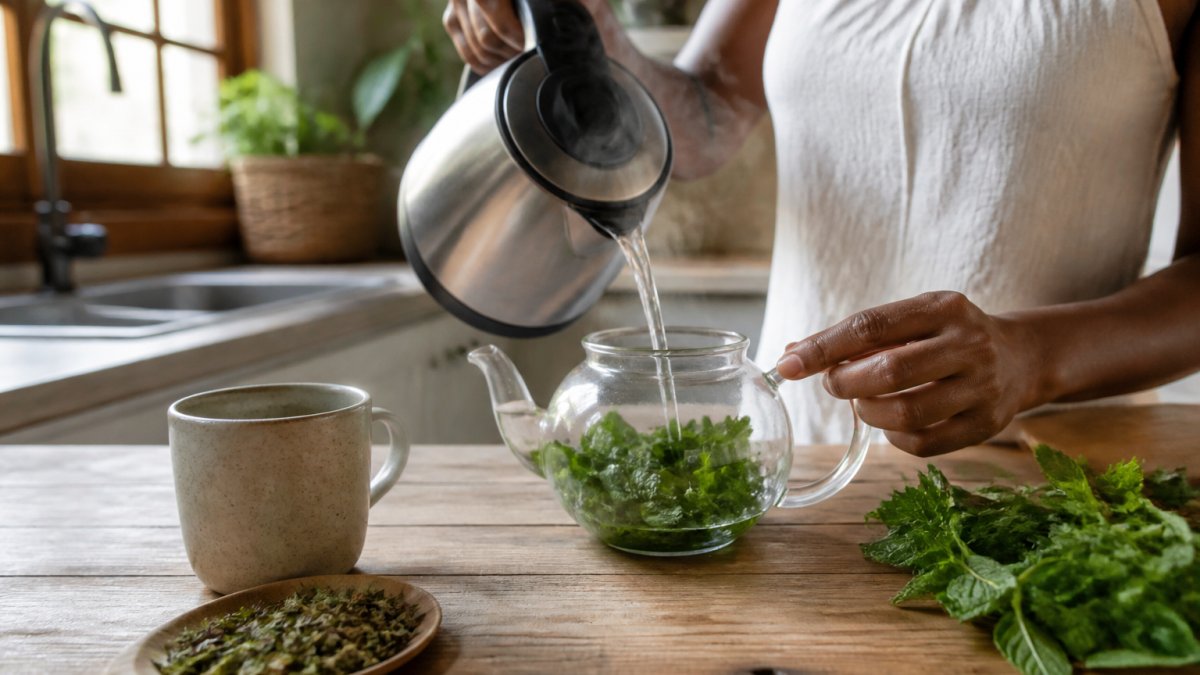
Making a good cup takes about five minutes, and the method affects how much you actually get from the leaves. Here is how we would do it:
- Boil fresh water and let it cool for about 30 seconds. Water that is too hot can make the tea taste bitter.
- Add one heaped teaspoon of dried peppermint leaves to an infuser or strainer, or use one tea bag.
- Pour 8 ounces of water over the leaves.
- Cover the cup and steep for 5 to 7 minutes.
- Remove the leaves and sip slowly while warm.
For a full walkthrough on water temperature and timing, read our guide on how to steep herbal tea properly.
Loose Leaf vs. Tea Bags
Loose leaf is often preferred for flavor and aroma. If you are deciding whether organic loose leaf tea is worth it, our guide on how to decide if organic loose leaf ginger tea is worth it walks through the trade-offs. Tea bags are faster and tidier.
Choose based on your routine:
| Option | Best for | Trade-off |
|---|---|---|
| Loose leaf | Full flavor, slower sipping ritual | Needs an infuser and a strainer |
| Tea bags | Speed, travel, office use | Often made from smaller leaf pieces |
| Powdered blends | Quick mixing, no steeping | Different texture, less aroma |
If you go loose leaf, a good infuser makes the habit stick. Our guide to the best tea infuser for loose leaf tea covers what to look for.
When to Drink Peppermint Tea for Bloating
Timing is the part most people get wrong, and so is strength. A weak cup sipped at the wrong moment does little; a well-made cup at the right moment is where the ritual earns its place.
A warm cup after a meal is a common way people enjoy peppermint tea. A few simple rules we share with customers:
- Not on an empty stomach if you are prone to heartburn.
Other Herbal Teas for Bloating: Ginger, Chamomile, and Lemon Balm
Peppermint is not the only gentle option, and some people prefer a different leaf. Here are three other herbal teas people often consider:
- Ginger tea has a warming, spicy kick.
- Chamomile tea is mild, with a soft, gentle character.
- Lemon balm is a soft, lemony herb in the mint family.
Many people keep two or three on hand and rotate them. If your goal is calm and relaxation, our roundup of the best herbal teas for calm is a useful next read.
Is There a Downside to Drinking Peppermint Tea?
Yes, for some people. Peppermint can relax the valve at the top of the stomach, which may let acid back up. A health overview noting peppermint may worsen reflux points out that peppermint tea may make GERD symptoms worse.
Other things to keep in mind:
- Allergies: rare, but possible if you react to mint family plants
- Pregnancy: ask your doctor before using any herbal tea regularly
- Kids: keep servings small and check with a pediatrician
- Medication: tell your doctor about any herb you drink daily
When Bloating May Need Medical Evaluation
Occasional bloating after a big meal is normal. Bloating that shows up often, lasts for days, or comes with other symptoms is not something to self-treat with tea.
See a doctor if you notice:
- Bloating that does not go away or keeps coming back
- Severe abdominal pain or cramping
- Blood in your stool or black stools
- Unexplained weight loss
- Fever, vomiting, or trouble passing gas or stool
- Symptoms that wake you at night
These signs can point to conditions that need real medical care. Tea is a comfort, not a diagnosis.
Choosing Your Peppermint Tea for Digestive Comfort
A good cup starts with good leaves. Look for peppermint that smells bright and minty when you open the bag.
Store your tea in a sealed tin away from light and heat, and use it within about a year for the best flavor.
At Rastaman Brew, we offer wildcrafted Jamaican herbs, organic loose leaf teas, and Caribbean superfood blends. Our sustainably sourced brews are part of our collection.
A heavy, tight stomach after a meal is uncomfortable, and a simple warm cup can be a pleasant way to slow down. If you want peppermint you can actually taste, our organic loose leaf teas are available to browse. Browse the Rastaman Brew collection to find your next favorite cup, with wildcrafted herbs, sustainably sourced leaves, and blends made for everyday wellness. Get started with Rastaman Brew and make your after-meal ritual something you look forward to.
Frequently Asked Questions
Does peppermint tea help with belly bloat?
Peppermint tea is a gentle, caffeine-free drink many people find soothing after a meal. Much of the clinical research on peppermint examines concentrated peppermint oil rather than brewed tea. Treat it as a comfort measure, not a guaranteed fix.
How long does it take peppermint tea to reduce bloating?
There is no tea-specific clinical data establishing a timeline for peppermint tea. If bloating persists for hours or returns daily, speak with a healthcare provider about what is driving it.
What is the best time of day to drink peppermint tea for bloating?
Many people enjoy a cup after a meal. If you are prone to reflux, check with your healthcare provider before drinking peppermint tea.
Is peppermint tea safe to drink every day?
If you take medication or manage a chronic digestive condition, check with your doctor before making peppermint tea a daily habit.


