
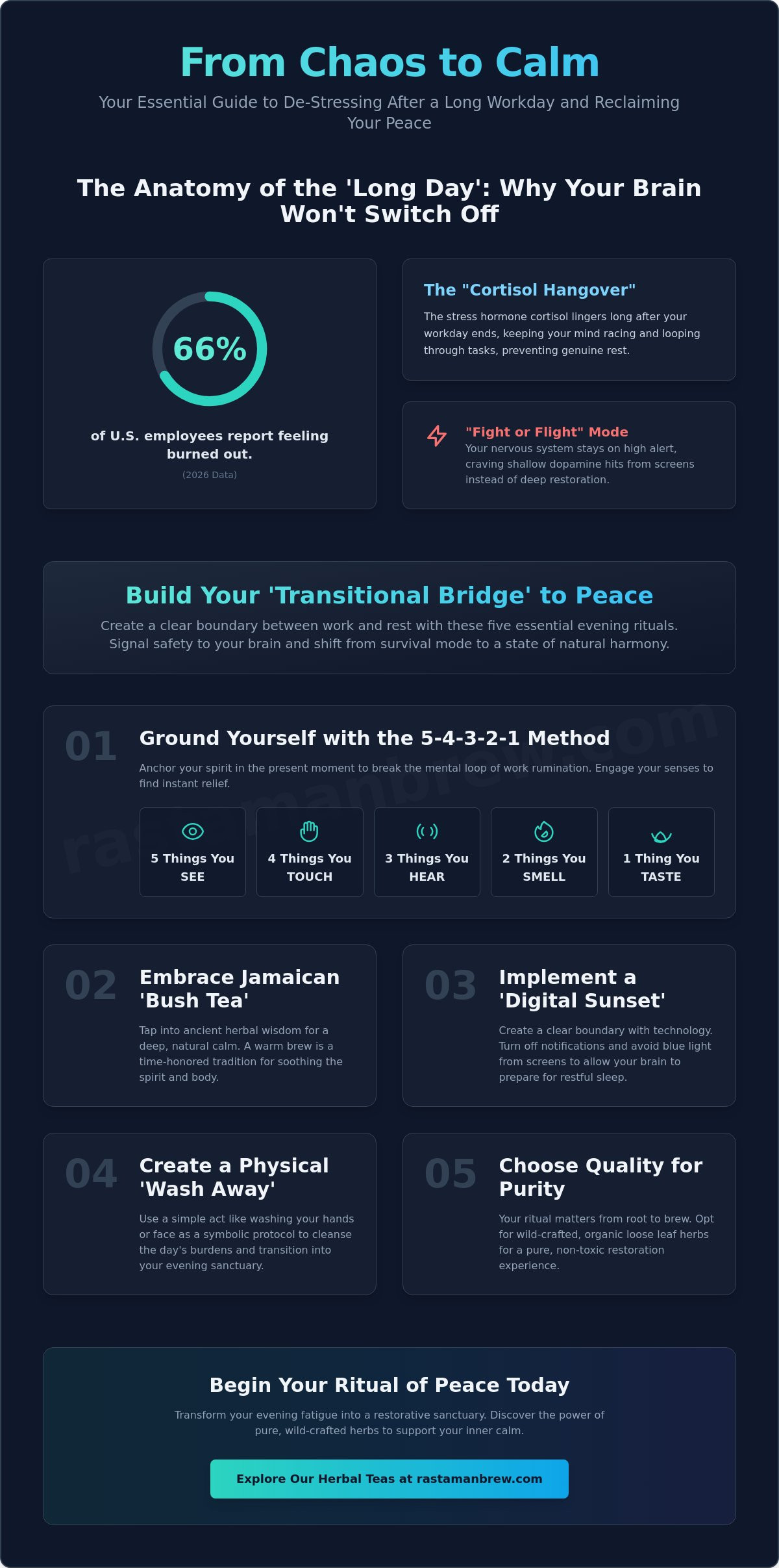
Did you know that 66% of U.S. employees report feeling burned out as of 2026? This heavy exhaustion makes it difficult to figure out how to de-stress after a long day without falling into the trap of mindless screen time. You likely find yourself carrying physical tension in your shoulders while your mind continues to replay work tasks. It's a common struggle to silence the mental noise and release the guilt of not being productive during your sacred hours of rest.
We're here to help you transform that evening fatigue into a restorative ritual of peace. You'll discover how to use ancient herbal wisdom and modern wellness practices to create a clear boundary between work and home. This guide previews five essential rituals, featuring our finest wild-crafted herbs and time-honored traditions, designed to support your inner calm and ensure a better night of sleep. Let's move from the chaos of the day into a state of natural harmony together.
Key Takeaways
- Understand the "cortisol hangover" and why your brain needs a mindful ritual rather than digital screens to fully transition from work to rest.
- Learn the 5-4-3-2-1 sensory grounding technique to anchor your spirit in the present moment and find instant relief from mental noise.
- Discover how to de-stress after a long day by embracing the ancient wisdom of Jamaican "Bush Tea" rituals for deep, natural calm.
- Establish a clear boundary with a "Digital Sunset" and a physical work-to-home transition protocol to protect your evening sanctuary.
- Recognize why choosing wild-crafted and organic loose leaf herbs is essential for a pure, non-toxic restoration experience.
The Anatomy of the 'Long Day': Why Your Brain Won't Turn Off
When the workday ends, your body doesn't automatically switch off. Cortisol, the hormone that kept you sharp during meetings, often lingers in your system long after you've closed your laptop. This "Cortisol Hangover" keeps your mind looping through tasks, making it difficult to figure out how to de-stress after a long day effectively. According to 2026 workplace data, 40% of global employees reported experiencing significant stress during their previous day. Instead of genuine restoration, many fall into the trap of "numbing out" with screens, which provides a shallow dopamine hit but fails to address the underlying tension that 43% of U.S. workers carry home.
To better understand this biological struggle, watch this helpful video:
Cortisol keeps your nervous system in a high-alert "fight or flight" mode, making your brain crave quick dopamine hits from phones when you're exhausted. However, true vitality comes from activating the parasympathetic nervous system, which governs the "rest and digest" state. This shift is essential for moving from survival to holistic wellbeing. By understanding this biological tension, you can begin to choose rituals at Rastaman Stew that signal safety to your brain and support a natural state of calm. This transition is about moving beyond exhaustion and toward a state of purity and balance.
Identifying Your Personal Stress Signature
Recognizing your "stress signature" is the first step toward balance. For some, stress is physical, manifesting as tension in the neck; for high-achievers, it's often a mental loop of rumination. This "tired but wired" state makes simple "doing nothing" feel stressful because your worth is tied to productivity. Integrating specific relaxation techniques allows you to address these signatures directly. Whether you need to release physical knots or quiet a loud mind, identifying these patterns prevents burnout and prepares you for a deeper, more intentional evening.
Decision fatigue from a long day often makes it nearly impossible to choose healthy relaxation methods. This is why a "transitional bridge" is necessary to separate your role as an employee from your identity as an individual. This bridge acts as a sacred boundary, allowing you to shed the day's burdens before entering your home sanctuary. Understanding how to de-stress after a long day requires this intentional pause to reset your nervous system. By creating a consistent routine, you honor your need for tranquility, ensuring that your home remains a place of genuine restoration and inner peace.
Sensory Grounding: Engaging the Five Senses for Instant Relief
Transitioning from a state of high-alert to inner peace requires more than just sitting down. You must actively engage your senses to anchor your spirit in the present moment. This is where how to de-stress after a long day becomes a tangible practice rather than a vague goal. By focusing on immediate physical sensations, you pull your mind away from the "mental loop" discussed earlier. One effective way to start is the 5-4-3-2-1 method, adapted for your home sanctuary. Identify five things you see, four you can touch, three you hear, two you smell, and one you can taste. This shift in focus acts as a circuit breaker for workplace rumination, allowing your nervous system to finally exhale.
While over 60% of adults turn to the television to "numb out," the blue light and fast-paced imagery can actually hinder your recovery. A 2025 study on auditory triggers indicates that brown noise or nature sounds are far more effective for deep relaxation than digital media. These constant, low-frequency sounds mimic the soothing rhythms of a tropical forest, helping your brain enter a state of visual stillness. Complement this with tactile rituals. The act of washing your face or hands isn't just hygiene; it's a symbolic way of "washing away" the day's burdens. These simple grounding techniques provide an immediate physical signal to your body that the threat is gone and safety has returned.
Aromatic Anchors and Visual Stillness
In traditional Jamaican practices, scents like lemongrass or pimento have been used for generations to trigger relaxation and mental clarity. These aromatic anchors signal to the limbic system that it's time to wind down. To complement these herbal aromas with a layer of luxury, you can visit Boujee Life to discover premium scented candles that help set a tranquil mood. To maximize this effect, lower the lights in your home at least two hours before sleep. This encourages natural melatonin production, which is often suppressed by harsh office lighting. Clearing even one small "sacred space" from clutter allows your eyes to rest without being reminded of chores or unfinished tasks. Visual stillness is the first step toward a quiet mind.
The Healing Power of Temperature and Touch
Hydrotherapy is a time-honored practice for a reason. A warm shower serves as a psychological reset button, relaxing tight muscles and lowering blood pressure by up to 10% in some cases. Finding natural ways for how to de-stress after a long day often starts with the skin. Take off your shoes and walk barefoot on natural textures like wood or stone to reconnect with the earth's energy. If you carry tension in your jaw or neck, use gentle self-massage to release those physical stress signatures. To deepen this sensory journey, you might enjoy exploring our wild-crafted herbal teas, which offer a fragrant and soothing way to end your evening ritual.
Ancient Roots: Jamaican Herbal Traditions for Inner Calm
In the heart of Jamaican culture, the concept of "Bush Tea" represents a deep-seated tradition of healing and restoration. Unlike the generic "tea time" often suggested by western wellness blogs, this practice is a sacred dialogue with the earth. Understanding how to de-stress after a long day starts with acknowledging that your body is a reflection of the natural world. By selecting wild-crafted herbs, you're choosing to nourish your spirit with the same purity found in the soil. The act of brewing itself is a mindful ritual. It requires patience and presence, creating a necessary "forced pause" that disrupts the frantic pace of modern life. The five to ten minutes spent watching the steam rise from your cup is a meditative act. It forces you to be still while the herbs work their magic.
Quality matters when you're seeking true restoration. Mass-produced tea bags often contain "fannings" or tea dust, which lose their essential oils and medicinal potency during processing. In contrast, loose leaf herbs maintain their structural integrity and vitality. This difference is crucial for those looking for how to de-stress after a long day effectively. When you see the whole leaves unfurl in hot water, you're witnessing the release of life-force energy that processed alternatives simply cannot provide. This connection between the root and the brew ensures that you're receiving the plant's full spectrum of benefits, just as nature intended.
Soursop and Fever Grass: Nature's Gentle Sedatives
Traditional Jamaican wellness relies heavily on the calming properties of local flora. Many families reach for Graviola tea, also known as Soursop, to support deep and restful sleep. Its leaves act as a gentle sedative for the nervous system, helping to quiet the "tired but wired" state. Similarly, Fever Grass, or Lemongrass, is prized for its ability to soothe the digestive system, which often carries the physical weight of stress. Wild-crafted herbs like these retain significantly more vitality and therapeutic compounds than those grown on industrial farms using synthetic fertilizers. This purity is vital, especially as the Jamaican Ministry of Health and Wellness continues to modernize standards for herbal products in 2026.
Blue Vervain: The 'Nerve Herb' for Modern Anxiety
For the chronic overthinker, Blue Vervain is a cornerstone of Jamaican herbalism. Often called a "nerve herb," it's specifically used to quiet the mental noise that prevents true relaxation. This tradition treats the mind and body as one interconnected system, recognizing that a restless spirit eventually manifests as physical tension in the neck and jaw. By ensuring the purity of the source, you ensure the efficacy of the brew. When you sip an authentic, organic infusion, you're not just consuming a beverage; you're participating in a time-honored ritual that aligns your inner state with the tranquility of nature. It's a journey back to yourself, supported by the wisdom of ancient roots.
Creating Your Evening Sanctuary: A Step-by-Step Protocol
Building a sanctuary begins with a physical shift that signals your workday is done. Start by stowing your laptop out of sight and changing into soft, natural fibers to shed your professional identity. Following this, the "Cleansing Ritual"—like a warm shower—acts as a symbolic barrier against the day's energetic residue. This structured protocol is the ultimate answer for how to de-stress after a long day, moving you from a state of performance to one of presence. By intentionally separating these roles, you protect your home environment from the lingering noise of the office.
Implementing a Digital Sunset
A critical component of this sanctuary is the "Digital Sunset," which involves setting a firm boundary with your devices by 8 PM. Blue light is a known disruptor of relaxation, but replacing the screen's glow with a premium loose leaf wellness tea ritual provides a healthier alternative. By setting your phone to "Do Not Disturb," you create a psychological wall that guards your peace. This transition allows your mind to settle, ensuring your evening remains a space for restoration rather than constant connection.
The Art of the Mindful Brew
The "Nourishment Ritual" centers on the 5 to 7 minutes of steeping time required for your infusion. Use this period for deep breathing, allowing the warmth of the cup to serve as a "comfort anchor" for your nervous system. To truly elevate this experience, using high-quality tea accessories transforms a simple drink into a sacred ceremony. This level of intentionality is how to de-stress after a long day with lasting results, as it anchors the body and mind in a shared state of tranquility.
Complete your evening with a "Reflective Pause," such as light stretching or journaling, to process any remaining thoughts. This final step ensures that you enter sleep with a clear heart and a quiet mind. Reclaiming your evening doesn't happen by accident; it requires a commitment to these small, intentional acts of self-care. If you're ready to build your own sanctuary, you can explore our collection of wild-crafted herbs at Rastaman Stew. Let’s brew something together that honors your need for natural, time-honored calm.
From Root to Brew: Why the Quality of Your Ritual Matters
True restoration requires high-quality tools that honor the spirit. While the global wellness app market is valued at over $12.8 billion in 2026, digital fixes often fail to provide the physical grounding required for deep rest. Authentic ritual is a sensory journey that moves you away from "fast wellness" and toward a deep connection with the earth. Understanding how to de-stress after a long day means choosing ingredients that carry the vitality of their origin. At Rastaman Stew, we provide the raw, organic elements needed to transform a simple evening into a sacred space of restoration.
The Integrity of Wild-Crafted Herbs
Wild-crafted herbs are harvested from their natural habitats, ensuring they reach peak nutrient density without the interference of synthetic fertilizers. By avoiding the "chemical stress" of pesticides found in mass-produced teas, you ensure your de-stressing experience is truly clean and non-toxic. When buying Jamaican herbal tea online, you're investing in a lineage of healing that dates back generations. This commitment to purity is essential for those who want their evening ritual to be as effective as it is authentic.
Building a Sustainable Wellness Practice
A sustainable wellness practice is built on consistency rather than occasional "spa days." Small, intentional acts performed every night have a cumulative effect on your nervous system, building long-term resilience against daily pressures. We invite you to explore the full collection of wild-crafted herbs and accessories at rastamanbrew.com to find your perfect evening companion. Whether you seek the deep calm of Soursop or the mental clarity of Blue Vervain, these herbs are designed to integrate seamlessly into your modern lifestyle.
Reclaiming your peace is a courageous act in a hyper-connected world. Rastaman Stew honors ancient Jamaican roots in every modern cup, ensuring that your wellness journey is grounded in tradition and authenticity. Every infusion is an opportunity to pause, breathe, and return to your center with clarity and grace. How to de-stress after a long day is ultimately a personal journey, but you don't have to walk it alone. Let's brew something together that nourishes your spirit and supports your natural state of wellbeing.
Reclaim Your Evening Peace
Reclaiming your time is a vital act of self-preservation in a world where 66% of employees report feeling burned out. You now have the tools to transform your transition from work to home using sensory grounding and the "Digital Sunset." By moving away from the 43% of workers who remain tense throughout their evening, you're choosing a path of genuine restoration. Learning how to de-stress after a long day is about more than just stopping work; it's about actively inviting purity and balance back into your spirit through intentional, time-honored practices.
Your journey from root to brew is supported by ancient Jamaican traditions that treat the mind and body as one interconnected system. We invite you to elevate your evening ritual with our wild-crafted Jamaican herbal teas at Rastaman Brew. Our collection features organic, sustainably sourced ingredients that honor the authentic roots of herbalism. Every cup is a commitment to your holistic well-being and a rejection of "fast wellness" digital distractions. Let's brew something together that nurtures your inner calm and supports a natural state of harmony. You deserve a sacred space of peace every single night.
Frequently Asked Questions
What is the best tea to drink after a stressful day?
Soursop Leaf tea is widely considered the best choice for deep relaxation due to its traditional use as a gentle sedative. Its natural compounds help quiet the nervous system after hours of high-pressure activity. Another excellent option is Blue Vervain, which specifically targets mental loops and overthinking. These wild-crafted herbs provide a pure, non-toxic alternative to processed beverages, supporting your inner calm without the "chemical stress" of additives.
How can I de-stress in 5 minutes if I'm short on time?
You can achieve immediate relief in five minutes by practicing the 5-4-3-2-1 sensory grounding exercise. Identify five things you see, four you can touch, three you hear, two you smell, and one you can taste. This quick shift in focus acts as a circuit breaker for workplace rumination. It forces your brain to exit survival mode and enter the present moment, providing a necessary pause before you continue with your evening.
Is it better to exercise or relax immediately after work?
Gentle movement is often better than static relaxation if you're feeling "tired but wired" with high cortisol levels. About 43% of U.S. workers report feeling tense during their day, and light stretching can help release that physical energy. However, if your exhaustion is purely physical, a mindful ritual like brewing tea is more effective. The goal is to move from a sympathetic state to a parasympathetic "rest and digest" mode.
Can certain herbs actually lower cortisol levels?
Certain herbs known as nervines and adaptogens can help the body manage cortisol more effectively. Jamaican Blue Vervain is a time-honored tradition for soothing the nervous system and reducing the "Cortisol Hangover" that lingers after work. While 40% of global employees reported significant stress in 2026, these natural remedies offer a way to support the body's resilience. Choosing organic, wild-crafted sources ensures you receive the plant's full nutrient density without pesticides.
Why do I feel more stressed when I try to relax?
You feel more stressed because the sudden removal of distractions allows suppressed worries to surface. This is common for high-achievers who equate "doing nothing" with a lack of productivity. When you stop the frantic pace, your brain finally has space to process the day's events. Using a structured ritual for how to de-stress after a long day provides a "bridge" that keeps the mind occupied with a calming task rather than a void.
What is a 'Digital Sunset' and how does it help with stress?
A Digital Sunset is the practice of setting a firm boundary with electronic devices, typically starting by 8 PM. By turning off screens, you avoid blue light which suppresses melatonin production and keeps your brain in a state of high-alert. This ritual is a crucial step in how to de-stress after a long day because it prevents the 13% of workers who worry about AI and job security from being triggered by late-night notifications.
How does Jamaican Blue Vervain help with anxiety?
Jamaican Blue Vervain acts as a powerful "nerve herb" that specifically targets the mental noise associated with overthinking and anxiety. In Jamaican herbalism, it's used to treat the mind and body as one interconnected system. It helps release tension in the jaw and neck where stress often hides. By choosing a pure, wild-crafted brew, you're using a time-honored remedy that aligns your inner state with the tranquility of nature.
What are some quick sensory grounding exercises I can do at home?
Quick sensory exercises include splashing cold water on your face or walking barefoot on a natural texture like wood. These actions provide an immediate physical signal to your body that the workday is over. You can also hold a warm cup of herbal tea, using the heat as a "comfort anchor" for your nervous system. These techniques are grounded in wellness traditions that prioritize presence and intention over the "numbing out" of digital screens.


