
Table of Contents
- Why Vegans Hit an Energy Slump (and What Actually Fixes It)
- 7 Vegan Foods to Boost Energy Throughout the Day
- Vegan Iron-Rich Foods That Fight Tiredness
- Vitamin B12 for Vegans: The Nutrient Most Diets Miss
- Vegan Energy-Boosting Drinks (Caffeine-Free Options Included)
- How to Combine Foods for Lasting Energy: Meal and Snack Pairings
- Natural Energy Boosters for Vegans: Quick Reference
- Conclusion
- Frequently Asked Questions
Last Updated: October 18, 2026
Why Vegans Hit an Energy Slump (and What Actually Fixes It)
A well-planned vegan diet can support steady energy all day, but a plant-based diet built mostly on refined carbohydrates and coffee often leads to an afternoon crash. People go vegan for ethical or health reasons, then wonder why they feel drained by mid-afternoon. Breaking this cycle of reliance on stimulants often requires exploring coffee alternatives that provide a more sustained lift without the inevitable slump.
The fix isn't more caffeine. It's eating in a way that keeps blood sugar stable and nutrient intake high. Below, we'll show you exactly how to build meals around natural energy boosters for vegans, plus the nutrient gaps that quietly drain energy.
Short Boost vs. Steady Energy: Know the Difference
A short boost is a spike: white bread, sugary snacks, or a second espresso. It feels good for 30 minutes, then drops you lower than before. Steady energy comes from complex carbohydrates, plant-based protein, and healthy fats digested slowly.
Fatigue on a vegan diet usually traces back to three things: too few calories, low iron, or low vitamin B12. Fix those and most slumps fade.
7 Vegan Foods to Boost Energy Throughout the Day
These seven vegan foods to boost energy cover the spectrum from quick snacks to slow-burning staples.
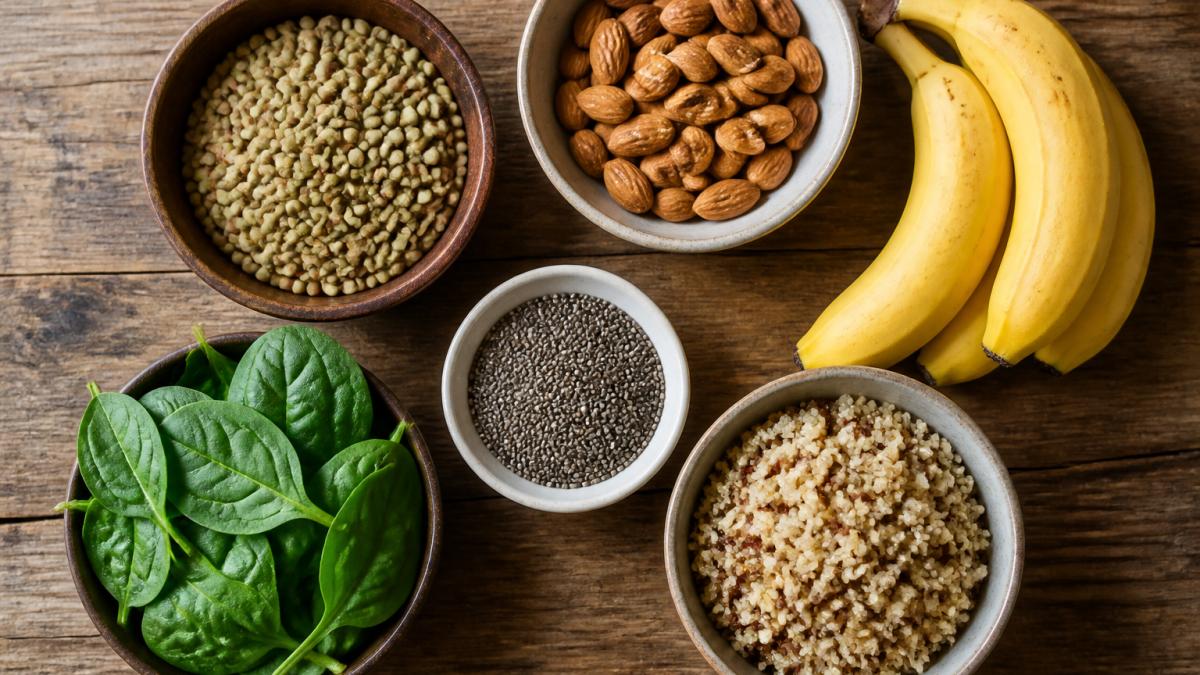
1. Oats and whole grains. One half-cup of dry rolled oats (about 150 calories) supplies roughly 27 grams of carbohydrate and 4 grams of fiber.
2. Lentils and beans. One cup of cooked lentils delivers about 18 grams of plant protein and 6.6 milligrams of iron, plus slow carbohydrates.
**3.
4. Leafy greens. One cup of cooked spinach supplies about 6.4 milligrams of iron and a meaningful dose of folate.
5. Bananas. A medium banana is about 105 calories and 27 grams of carbohydrate, with potassium and vitamin B6.
6. Sweet potatoes. One medium baked sweet potato (about 2 grams of protein, 24 grams of carbohydrate) is a starchy carbohydrate with fiber and beta-carotene.
**7.
Whole Grains and Complex Carbs
Complex carbohydrates are the backbone of steady energy. Unlike refined sugars, whole grains break down slowly, keeping energy levels even between meals. Swap white rice for brown rice, and white bread for whole-grain varieties. The switch is small, but most people notice fewer energy slumps within a week. Read the label: "wheat bread" is often refined flour with caramel color, while "100% whole grain" means the bran and germ are still present.
Beans, Legumes, and Plant-Based Protein
Beans and legumes do double duty: plant-based protein for muscle repair and complex carbohydrates for fuel. Chickpeas, black beans, and lentils are the workhorses here. If you use protein powders, pea protein and hemp protein are gentle, vegan-friendly options that mix well into smoothies. Aim for about 1/2 cup to 1 cup of cooked legumes per meal rather than a token sprinkle.
Nuts, Seeds, and Healthy Fats
Healthy fats slow digestion and help you absorb fat-soluble vitamins. Almonds, chia seeds, and hemp seeds are easy to carry and need no preparation. A handful of almonds with a banana makes a balanced snack that beats a granola bar. Keep portions to about one ounce of nuts or one to two tablespoons of seeds; the calories add up quickly, and the goal is steady fuel, not a fat overload.
Vegan Iron-Rich Foods That Fight Tiredness
Vegan iron-rich foods are the most overlooked fix for persistent fatigue. Plant iron (non-heme) absorbs less efficiently than animal iron, so pair iron sources with vitamin C. Spinach, lentils, chickpeas, pumpkin seeds, and fortified cereals all count. Add oranges, bell peppers, or a squeeze of lemon to the same meal, and absorption improves.
Jamaican Sea Moss Powder 8oz – Wildcrafted Irish Sea Moss for Smoothies, Teas →
If tiredness continues despite iron-rich meals, ask a doctor for a blood test rather than guessing.
Vitamin B12 for Vegans: The Nutrient Most Diets Miss
Vitamin B12 for vegans is the one nutrient plants don't reliably provide. B12 supports red blood cell formation and nerve function; a deficiency causes fatigue, weakness, and brain fog. Fortified foods and supplements are the standard route. The NIH Office of Dietary Supplements B12 fact sheet outlines recommended amounts and food sources. Get levels checked annually.
Vegan Energy-Boosting Drinks (Caffeine-Free Options Included)
Vegan energy-boosting drinks don't have to mean coffee. Caffeine-free options keep energy steady without the crash. Caffeine-free herbal teas are a solid option, including soursop leaf, moringa, and hibiscus blends. Smoothies with sea moss also fit. Our Rastaman Stew Soursop and Moringa Blend Tea is naturally caffeine-free, and one teaspoon of our Jamaican Sea Moss Powder blends into any smoothie. Hydration matters too: mild dehydration reads as tiredness. Keep water visible and sip through the day.


How to Combine Foods for Lasting Energy: Meal and Snack Pairings
Combining foods is where most guides stop short. Pair a carbohydrate with protein or fat at every meal, and energy stays level. The table below turns the food list into a day of balanced combinations, and the sections after it cover portable snacks and use cases so the guidance survives a real schedule.
| Time | Meal | Why It Works |
|---|---|---|
| Breakfast | Oats + chia seeds + banana | Slow carbs plus healthy fats |
| Mid-morning | Almonds + orange | Protein plus vitamin C for iron |
| Lunch | Lentil bowl + spinach + lemon | Plant protein plus iron absorption |
| Afternoon | Herbal tea + handful of seeds | Caffeine-free pick-me-up |
| Dinner | Sweet potato + beans + kale | Starchy carbs plus protein |
Portable Snack Combinations That Hold Up
A snack that carries you from 3 p.m. to dinner needs carbohydrate for quick fuel plus protein or fat to slow the release. These combinations travel well and need no heating:
- Apple + two tablespoons of peanut butter. The apple supplies quick carbohydrate; the peanut butter adds protein and fat that stretch the effect to roughly two hours.
- Whole-grain crackers + hummus. About 1/4 cup of hummus adds chickpea protein and fiber to the crackers' starch.
- Trail mix with nuts, seeds, and dried fruit. Keep the dried fruit to a small handful so the sugar load stays modest.
- Soy or pea protein shake + banana. Useful after a workout when appetite is low but the body needs protein and carbohydrate together.
- Roasted chickpeas. A half-cup delivers protein and fiber in a crunchy form that replaces chips.
Matching the Combination to Your Day
Different days call for different combinations. The principle stays the same, but the format changes:
- Busy mornings. Overnight oats made with soy milk, chia seeds, and berries can be assembled the night before and eaten cold. It combines slow carbohydrate, protein, and fat in one container.
- Before a workout. Keep it low in fiber and fat: a banana, a slice of whole-grain toast with jam, or a small smoothie with pea protein. Save the nuts and heavy fats for after.
- Long workdays. A lunch built on lentils or beans, a whole grain, and cooked greens holds longer than a salad alone. Add a mid-afternoon snack from the list above rather than relying on a second coffee.
- Quick snacks on the go. A banana plus a small bag of almonds, or a protein bar with at least 10 grams of protein and modest added sugar, beats a pastry when you are between meetings.
Sustained Energy vs. a Short-Lived Boost
The difference between a crash and steady energy usually comes down to meal composition, not willpower. A snack of refined carbohydrate alone, such as a white bagel or a sugary granola bar, raises blood glucose quickly and often leaves you lower within an hour or two. Adding protein, fat, or fiber to the same carbohydrate slows digestion and flattens that curve. That is why the pairings above repeat the same pattern: carbohydrate for fuel, protein or fat for staying power, and a micronutrient source such as greens or citrus alongside.
When Food Alone Is Not Enough
If you are eating balanced combinations and still feel persistently tired, the problem may be a nutrient gap rather than meal timing. Low iron and low vitamin B12 are the two most common culprits on a vegan diet, and both are diagnosed with a blood test, not by guessing. Ask a doctor or registered dietitian to check ferritin, hemoglobin, and B12 levels before adding supplements on your own. Food and meal timing can support energy, but they are not a substitute for medical advice when fatigue is ongoing.
Natural Energy Boosters for Vegans: Quick Reference
Here's the short version to keep on your phone. Natural energy boosters for vegans fall into four groups: slow carbs (oats, sweet potatoes), plant protein (lentils, peas), healthy fats (nuts, seeds), and micronutrients (iron, B12). Fix the nutrient gaps first, then build meals around the four groups. The USDA Dietary Guidelines offer a solid framework for balanced plant-based eating.
- One whole grain at breakfast
- One legume at lunch or dinner
- Nuts or seeds as a daily snack
- Iron source paired with vitamin C
- B12 supplement or fortified food daily
- Water bottle within reach all day
Conclusion
Persistent fatigue is the challenge most vegans face, and it rarely comes from one missing food. It comes from skipping meals, ignoring iron and B12, and leaning on caffeine. Rastaman Brew offers wildcrafted Jamaican herbs and superfoods: caffeine-free soursop and moringa teas, organic sorrel, and sea moss powder that blends into smoothies. Get started with Rastaman Brew and enhance your daily health journey.
Frequently Asked Questions
Why am I so tired all the time on a vegan diet?
Persistent tiredness on a vegan diet usually traces back to a few common gaps: low iron intake, missing vitamin B12, too few calories, or meals built on refined carbs that spike and crash your energy. Iron from plants is absorbed less efficiently than from meat, so pairing iron-rich foods with vitamin C helps. B12 occurs naturally almost only in animal products, so fortified foods or a supplement are essential. If fatigue continues after fixing these, get bloodwork done to rule out deficiencies.
Which vegan foods can help support steady energy?
Build meals around complex carbohydrates and plant protein. Oats, brown rice, and quinoa release energy slowly. Beans, lentils, and peas supply protein plus fiber. Nuts, seeds, and avocado add healthy fats that slow digestion. Bananas and oranges give a quicker lift with fiber attached. The key is combining categories at each meal rather than eating one food alone, which keeps energy levels steadier between meals.
Can a vegan diet provide enough iron and vitamin B12?
Iron is achievable through vegan iron-rich foods like lentils, chickpeas, spinach, kale, tofu, and pumpkin seeds, especially when eaten with vitamin C sources such as citrus or bell peppers. B12 is the harder one: it is not reliably present in plant foods, so vegans need fortified foods, fortified nutritional yeast, or a supplement. Checking B12 status with a blood test once a year is a practical habit for anyone on a long-term vegan diet.
What are some natural energy-boosting drinks for vegans?
Caffeine-free herbal teas are a solid option, including soursop leaf, moringa, and hibiscus blends. Smoothies with banana, spinach, chia seeds, and a plant-based protein powder deliver carbs, iron, and protein together. Sea moss powder stirred into a drink is a versatile addition. Water matters too: mild dehydration is a frequent and overlooked cause of an afternoon energy slump.
How can vegans avoid an afternoon energy slump?
Eat at regular meal intervals instead of skipping meals and compensating later. Pair carbohydrates with protein and fat at lunch, since a carb-only lunch is the classic setup for a 3 p.m. crash. Keep a snack ready, such as nuts with fruit or hummus with vegetables. Step away from the desk for a short walk, and drink water through the afternoon. If slumps happen daily despite these habits, ask a doctor about checking iron and B12 levels.


