
Table of Contents
- Why Authentic Jamaican Herbs for Wellness Are Worth Knowing
- 1. Cerasee (Bitter Melon): The Benefits of Drinking Cerasee Tea Daily
- 2. Soursop Leaf: A Traditional Caribbean Wellness Tea
- 3. Moringa: The Nutrient-Dense Leaf in Jamaican Herbal Medicine
- 4. Guinea Hen Weed and Jamaican Strong Back Herb Uses
- 5. Turmeric, Ginger, and Fever Grass: Everyday Jamaican Herbal Remedies
- 6. Jamaican Sea Moss Benefits and How It Fits a Wellness Routine
- How to Prepare Jamaican Herbal Tea (and Check What You Buy)
- Frequently Asked Questions
Last Updated: October 20, 2026
Why Authentic Jamaican Herbs for Wellness Are Worth Knowing
Walk through any Jamaican market and you'll see bundles of leaves tied with twine, roots stacked in baskets, and vendors who can tell you exactly which plant settles a sour stomach.
Here's the honest part most guides skip: traditional use is not the same as clinical proof. Jamaica's own health authorities and the U.S. National Center for Complementary and Integrative Health both note that most herbal traditions lack large clinical trials.
Below, we cover seven authentic Jamaican herbs for wellness, what tradition says about each, how to prepare them, and who should skip them.
1. Cerasee (Bitter Melon): The Benefits of Drinking Cerasee Tea Daily
Cerasee is the herb every Jamaican grandmother reaches for first. The vine, known botanically as bitter melon, grows wild across the island, and its leaves make a tea so bitter that children learn to dread it. Adults learn to respect it.

What Daily Cerasee Tea Traditionally Supports
Jamaican households use cerasee as a blood cleanser and digestive reset, often taken in the morning on an empty stomach. Traditional healers pair it with a "washout" routine for the stomach and skin. The benefits of drinking cerasee tea daily, in the traditional frame, center on digestion, regularity, and general detox support. Modern research has looked at bitter melon compounds, but no large trial confirms these traditional claims.
Taste, Dose, and Who Should Skip It
Expect bitter. Genuinely, sharply bitter. Steep a small pinch of dried leaf in hot water for 5-10 minutes, and don't overdo the leaf or you'll get a cup that's hard to finish. Our Dried Jamaican Cerasee Bitter Melon Loose Leaf Tea comes in a 2oz pouch at $19.95 and is organically dried with no additives.
2. Soursop Leaf: A Traditional Caribbean Wellness Tea
Soursop leaf tea is the calm, everyday cup in Caribbean herbal medicine. The leaves of the graviola tree, called guanabana in Spanish-speaking islands, are naturally caffeine-free and steep into a mild, slightly grassy brew.

Our Soursop Leaf Tea Bags give you 40 bags for $24.95, which suits anyone easing into Caribbean herbs. If you want to combine plants, our Soursop and Moringa Blend at $34.95 pairs the two leaves in one caffeine-free cup.
3. Moringa: The Nutrient-Dense Leaf in Jamaican Herbal Medicine
Moringa earns its reputation as a nutrient-dense green, and in Jamaican herbal medicine it functions as a general vitality herb. The leaf, botanically Moringa oleifera, is the part most commonly used, though the pods and seeds also appear in traditional preparations. You'll find it in teas, smoothies, and powdered blends, and it is one of the few Jamaican herbs that has crossed over into mainstream wellness shelves.
What Moringa Leaf Actually Contains
Moringa leaf is valued for its broad nutrient profile rather than any single compound. It carries plant protein, vitamin A precursors, vitamin C, calcium, iron, and potassium, along with antioxidants such as quercetin and chlorogenic acid. That combination is why it appears in Jamaican herbal medicine as a daily green. The practical takeaway is that moringa is food-like: it supports a generally balanced diet but does not replace one, and it will not correct a nutrient deficiency on its own.
How Moringa Is Prepared in Jamaican Tradition
Moringa is flexible, which is part of its appeal. Common traditional preparations include:
- Leaf tea: Steep one teaspoon of dried leaf in water just below boiling for 5-7 minutes. The flavor is mild and grassy, closer to spinach than to cerasee.
- Powdered blends: Stir a teaspoon into smoothies, juices, or porridge. Powder is the most common form because it disperses easily and keeps reasonably well when sealed.
- Fresh leaf: Where available, fresh moringa leaf is cooked into soups and rice, treated as a vegetable rather than a supplement.
A common mistake is treating moringa as a multivitamin replacement. It's food, and a good one, but it won't fix a poor diet on its own. Start with a small amount and increase gradually, since some people find large servings of raw leaf unsettling to the stomach.

Safety and Who Should Ask a Clinician First
Moringa leaf is generally well tolerated in food amounts, but a few cautions are worth stating plainly. The seeds and root contain different compounds than the leaf and are not interchangeable; traditional use of the root is not a reason to treat it casually. If you are pregnant or breastfeeding, taking thyroid medication, or managing diabetes, talk to your clinician or pharmacist before making moringa a daily habit, because the leaf can affect blood sugar and thyroid-related measures in some people.
4. Guinea Hen Weed and Jamaican Strong Back Herb Uses
Guinea hen weed, known botanically as Petiveria alliacea, is one of the most storied plants on the island. It has a sharp, garlicky smell that fills a kitchen the moment you open the bag.
Guinea Hen Weed (Petiveria alliacea) in Tradition
Caribbean and West African traditions use the leaf and root for immune support and digestive complaints. Our Guinea Hen Weed Loose Leaf Tea is 100% wildcrafted and organically dried, priced at $26.95 for a loose leaf pouch. Steep it 5-10 minutes for an earthy cup.
What Strong Back Herb Is Used For
Jamaican Strong Back herb uses center on the back and joints. The plant, also called Stachytarpheta jamaicensis, is brewed as a tea for muscular aches and stiffness after hard physical work. It's a classic laborer's remedy, and the name tells you exactly what it's for.
Jamaican Medina Ground Loose Leaf Herb Tea 4oz – Traditional Wildcrafted →
5. Turmeric, Ginger, and Fever Grass: Everyday Jamaican Herbal Remedies
Every Jamaican kitchen holds three staples: turmeric, ginger, and fever grass. They are the everyday tier of Jamaican herbal remedies, used more often than any single exotic import, and each has its own preparation tradition and its own cautions. Treating them as one blur misses what makes them useful.
Turmeric (Curcuma longa): The Yellow Root
Turmeric root, often called "yellow root" in Jamaican markets, goes into teas and tonics for its earthy warmth and traditional anti-inflammatory reputation. The color comes from curcumin, the compound most studied in modern research, though the amounts in a home-brewed cup are modest and absorption from tea is limited. Traditional preparations often pair turmeric with black pepper or with a fat such as coconut milk, a practical habit that reflects how curcumin is better absorbed with fat and piperine.
Ginger (Zingiber officinale): The Stomach Settler
Ginger settles the stomach and warms the body, and it's the first thing many households brew at the start of a cold. The rhizome is the part used, and the traditional preparation is simple: slice fresh ginger, simmer 10 minutes, and add honey once the cup has cooled slightly. Ginger is one of the better-studied household remedies, with research supporting its use for nausea, including motion sickness and morning sickness under clinical guidance.
Fever Grass (Cymbopogon citratus): The Citrusy Cooler
Fever grass, known elsewhere as lemongrass, makes a light, citrusy tea traditionally used to bring down fever and ease digestion. The leaves carry citral, the compound behind the lemon aroma, and the tea is naturally caffeine-free.
These aren't exotic imports. They're household remedies, and they work best as daily habits rather than emergency fixes. The honest framing is that tradition gives us the preparation and the cultural context, while modern research gives us the cautions.
6. Jamaican Sea Moss Benefits and How It Fits a Wellness Routine
Jamaican sea moss benefits come down to minerals. The seaweed, also called Irish moss, is a traditional Caribbean whole food rich in iodine and trace minerals. Islanders have long simmered it into a gel for smoothies and drinks.
Minerals, Iodine, and Realistic Expectations
Iodine supports thyroid function, but that cuts both ways. Too much iodine can be a problem for people with thyroid conditions, so check with your doctor before making sea moss a daily habit. Our Jamaican Sea Moss Powder at $19.95 mixes easily into drinks, and our Wildcrafted Raw Sea Moss at $26.95 soaks and blends into a gel.
How to Prepare Jamaican Herbal Tea (and Check What You Buy)
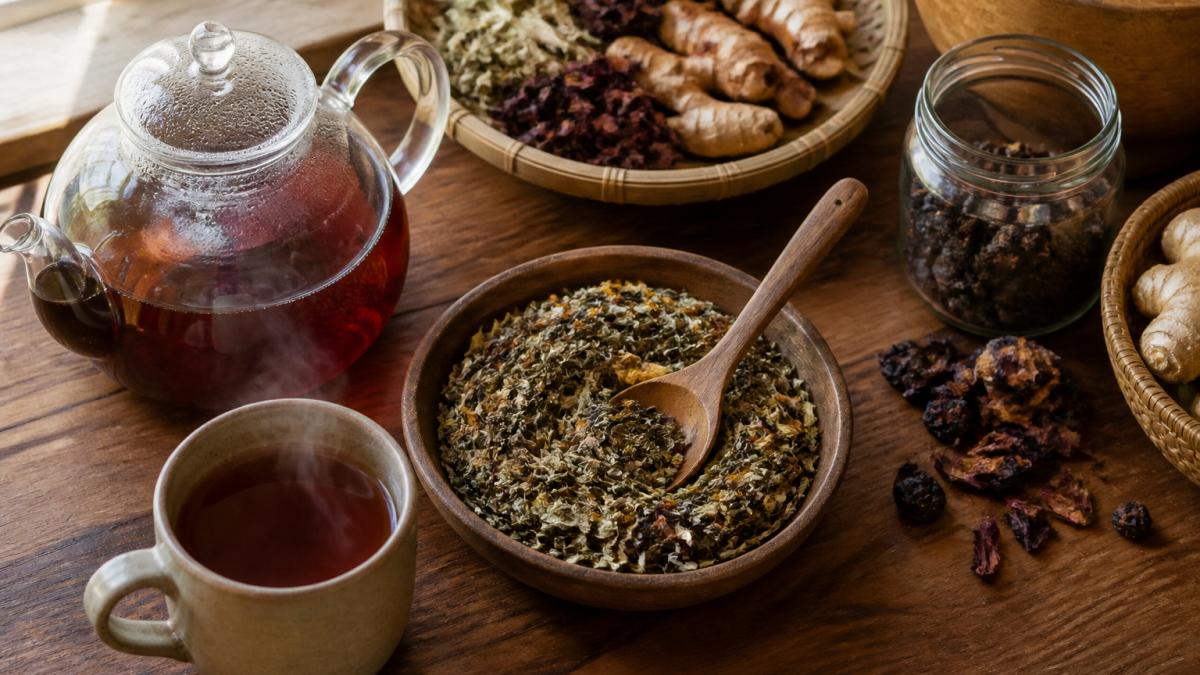
Preparation decides whether a Jamaican herbal tea tastes good or tastes like punishment. The method is simple, but the details matter.
Steeping, Cold Brewing, and Blending
Follow these steps for a clean, consistent cup:
- Measure the leaf. Use about one teaspoon of dried loose leaf per cup. Bitter herbs like cerasee need less.
- Heat water to just below boiling. Around 200°F works for most leaves.
- Steep 5-10 minutes. Longer pulls out more bitterness and more plant compounds.
- Strain and taste. Add nothing at first so you learn the herb's real flavor.
- Cold brew for hot days. Steep the same dose in cold water overnight in the fridge for a smoother, less bitter drink.
- Blend thoughtfully. Pair bitter herbs with ginger or sorrel to round out the flavor.
| Herb | Steep Time | Best Time to Drink | Watch Out For |
|---|---|---|---|
| Cerasee | 5-10 min | Morning, empty stomach | Pregnancy, diabetes meds |
| Soursop leaf | 5-8 min | Evening | Generally mild |
| Guinea hen weed | 5-10 min | Daytime | Strong odor, start small |
| Sea moss (gel) | N/A | Morning smoothie | Iodine and thyroid issues |
Sourcing, Quality, and Contamination Checks
Herbs absorb whatever is in their soil and water, so sourcing is a safety issue, not a luxury. The U.S. Food and Drug Administration tracks recalls and warnings on imported botanical products, and checking those before you buy from an unfamiliar seller is worth the two minutes.
Look for these signals of a trustworthy supplier:
- Clear botanical name on the label, not just a common name
- Country of origin stated
- No additives, fillers, or artificial colors
Frequently Asked Questions
Which Jamaican herbs are commonly brewed as tea?
The most common brewing herbs include cerasee (bitter melon), soursop leaf, moringa, guinea hen weed, fever grass, ginger, turmeric, and sorrel hibiscus. Most are steeped in hot water for 5 to 10 minutes, though root and bark herbs benefit from a longer simmer. Sorrel is often simmered and chilled for a cold drink. Loose leaf and tea bag formats both work; loose leaf gives you more control over strength. Start with one cup a day and adjust based on how you feel.
What is Jamaican Strong Back used for?
Strong Back is a traditional Jamaican name applied to more than one herb, most often discussed in connection with back discomfort, fatigue, and general vitality. Because the name is not standardized, the plant you receive can vary by seller, so ask for the botanical name before buying. If you have persistent back pain, see a clinician first, and tell them about any herbs you are taking, especially if you use blood thinners or blood pressure medication.
How can you tell whether Jamaican herbs are authentic and sustainably sourced?
Look for the botanical name on the label, not just the common name, plus a stated origin and a harvest or packing date. Ask sellers for third-party testing results covering heavy metals, pesticides, and microbial contamination. Wildcrafted sea moss should look uneven in color, ranging from golden to dark brown or purple, since uniform dye-like color is a warning sign. For loose leaf, check aroma and appearance: fresh dried herbs smell distinct, while musty or dusty product suggests poor storage.
Are Jamaican herbal remedies safe to use every day?
Daily use depends on the herb. Mild teas such as ginger, fever grass, and sorrel are widely consumed regularly, while bitter herbs like cerasee are traditionally taken in shorter stretches rather than indefinitely. Check with a healthcare provider before daily use if you are pregnant, breastfeeding, managing high blood pressure or diabetes, or taking prescription medication, since interactions are possible. Keep portions moderate, watch for digestive upset, and stop if you notice an adverse reaction.
Traditional Jamaican herbs reward patience and respect. They also demand honesty about what they can and cannot do. If you want wildcrafted, additive-free leaves and roots sourced directly from the island, Rastaman Brew carries loose leaf teas, powdered blends, and sea moss with clear botanical names and no fillers. Browse our authentic Jamaican herbal collection and start with one herb, brewed properly, before you build a routine.


