
Last Updated: October 27, 2026
Quick Summary
Herbal tea for digestion can help, but only when the herb matches the symptom: ginger for nausea, peppermint for gas and cramping, fennel for bloating, and chamomile for general queasiness. Ginger has the strongest research behind it, while fennel and chamomile have thinner clinical evidence and work best as gentle support.
- Ginger is the best-studied herb for nausea; sip a warm cup slowly over 10 to 15 minutes.
- Peppermint's menthol relaxes gut smooth muscle, easing trapped gas and cramping.
- Skip peppermint for heartburn or reflux, since it may relax the stomach valve and worsen symptoms.
- Give each herb about a week of fair trials before deciding whether it works for you.
- Most people do well with one to three cups a day; more is not better.
Table of Contents
- Does Herbal Tea Actually Help Digestion?
- The Best Tea for an Upset Stomach: A Symptom-by-Symptom Guide
- Ginger Tea for Digestion: The Strongest Evidence of the Bunch
- Peppermint Tea for Digestion: Cooling Relief for Bloating and Gas
- Fennel and Chamomile: Traditional Teas With Modest Research Behind Them
- How Often to Drink Herbal Tea for Digestion
- Safety, Interactions, and When to See a Doctor
- Brewing a Cup That Actually Works
- Frequently Asked Questions
Does Herbal Tea Actually Help Digestion?
Is herbal tea effective for digestion? The honest answer: sometimes, for some symptoms, and only with the right herb. Herbal tea for digestion is a real tradition with real research behind a few specific plants, but the evidence is uneven.
The strongest signal comes from a review of tea compounds and gut microbiome trials, which found early evidence that tea could support gut health, especially in people whose gut bacteria are out of balance from obesity or high-fat diets. That is promising, not proven.
Here is what most guides get wrong: they treat all herbal tea as one thing. It is not. Ginger behaves nothing like chamomile, and neither behaves like a cup of strong black tea.
For a deeper look at traditional Caribbean options, see our guide to herbal remedies for bloating and gas.
The Best Tea for an Upset Stomach: A Symptom-by-Symptom Guide
The best tea for an upset stomach depends on the symptom, not the label on the box. Ginger suits nausea. Peppermint suits gas and cramping. Fennel suits bloating. Chamomile suits general queasiness and tension. Matching the herb to the symptom matters more than the brand, and it matters more than drinking a single "digestive blend" for every problem.
| Symptom | First-choice herb | Backup option | Typical steep | When to expect a change |
|---|---|---|---|---|
| Nausea | Ginger | Chamomile | 10 minutes, covered | 15-30 minutes after sipping |
| Gas and cramping | Peppermint | Fennel | 5-7 minutes, covered | Within the same hour |
| Bloating | Fennel | Peppermint | 7-10 minutes, covered | 30-60 minutes |
| General queasiness | Chamomile | Ginger | 5-10 minutes, covered | 20-40 minutes |
| Post-meal heaviness | Ginger or peppermint | Fennel | 7-10 minutes, covered | 30-60 minutes |
| Heartburn or reflux | Ginger or chamomile | , | 7-10 minutes, covered | Varies; peppermint may worsen it |
| Constipation | , | , | , | Tea is not a laxative; see a clinician if persistent |
How to read the table
- Nausea. Ginger is the best-studied option. A warm cup sipped slowly over 10-15 minutes is the common pattern. If nausea comes with vomiting, blood, or severe pain, tea is not the answer, see the safety section below.
- Gas and cramping. Peppermint's menthol relaxes smooth muscle, which is why it helps trapped gas and the ache that comes with it. Spearmint is a gentler cousin with a similar effect. Both are caffeine-free.
- Bloating. Fennel is a traditional carminative, a herb used to ease gas and bloating. It is often served after dinner for exactly that reason. Its mild licorice flavor pairs well with peppermint.
- General queasiness. Chamomile is the soothing one. It shines for a nervous, queasy stomach, especially before bed. Human evidence for digestive benefit is limited, so treat it as gentle support.
- Post-meal heaviness. Ginger or peppermint both fit. Ginger speeds up stomach emptying, which helps with that heavy post-meal feeling; peppermint relaxes the gut wall.
- Heartburn or reflux. This is the symptom where the wrong tea backfires. Peppermint can relax the valve at the top of the stomach and worsen reflux for some people. If reflux is your problem, skip peppermint and try ginger or chamomile instead.
- Constipation. No herbal tea on this list is a reliable laxative. If constipation is your main issue, tea is not the right response; talk to a clinician about fiber, fluids, and other options.
A simple decision path
- Name the dominant symptom, nausea, gas/cramping, bloating, queasiness, or reflux.
- Pick the first-choice herb for that symptom, not a blend.
- Brew one cup at the strength in the table and sip it slowly.
- Give it one week of fair trials before deciding it does or does not work for you.
- If the symptom is severe, persistent, or paired with warning signs, stop experimenting and seek care.
For a wider menu of natural options, our guide to natural digestive aid tea covers traditional roots in more depth.
Ginger Tea for Digestion: The Strongest Evidence of the Bunch
Ginger tea for digestion has the most consistent research behind it of any herb on this list. Ginger is a well-studied root for nausea, and it is the one we reach for first when the stomach is churning. For a practical option, see this Jamaican ginger tea recipe for nausea.
Peppermint Tea for Digestion: Cooling Relief for Bloating and Gas
Peppermint tea for digestion is the go-to for gas, bloating, and cramping. Peppermint contains menthol, which relaxes the smooth muscle of the gastrointestinal tract. That relaxation is what eases trapped gas and the ache that comes with it.
Fennel and Chamomile: Traditional Teas With Modest Research Behind Them
Fennel and chamomile are traditional teas with modest research behind them. Both have long histories in digestive relief, but the clinical evidence is thinner than ginger's. That does not make them useless. It means you should treat them as gentle support, not treatment.
Chamomile is the soothing one. A review of herbal infusions and health noted that German chamomile may affect sugar-release pathways in the gut, though human evidence for digestive benefit is limited. Chamomile shines for a nervous, queasy stomach, especially before bed.
Jamaican Medina Ground Loose Leaf Herb Tea 4oz – Traditional Wildcrafted →
A word of caution from the Federal Trade Commission's health products guidance: traditional use is not proof. Some herbal tea marketing leans on history while admitting there is no scientific evidence it works. Read claims with that in mind.
How Often to Drink Herbal Tea for Digestion
More is not better. Herbs are mild but not inert. Give each one a fair trial, about a week, and note what changed. If a tea does nothing for you, stop drinking it.
Safety, Interactions, and When to See a Doctor
Herbal tea is generally safe for most adults in normal amounts, but "natural" does not mean risk-free. Some herbs interact with medications, are not right for certain people, or become a problem at high doses. The cautions below are practical, not exhaustive; when in doubt, ask a pharmacist or clinician who knows your medications and conditions.
Herb-by-herb cautions
- Senna and other laxative herbs. Often sold as "detox" or "slimming" teas. They are not the same as the digestive teas above and can cause cramping and dependence with regular use. Read the ingredient list before you buy.
Who should be extra careful
- Allergies. If you react to ragweed, daisies, or mint family plants, check the herb before you brew.
How much is too much
Most people do well with one to three cups a day. More is not better. Herbs are mild but not inert, and concentrated extracts are not the same as a brewed cup. If you are using a tea daily for more than a few weeks, it is reasonable to check in with a clinician, especially if you take prescription medication.
When to see a doctor
- Severe or lasting stomach pain, especially pain that wakes you at night
- Blood in your stool or black, tarry stools
- Unexplained weight loss
- Persistent vomiting or inability to keep fluids down
- Difficulty swallowing or food that feels stuck
- Fever with abdominal pain
- Symptoms that do not improve after a week or two of home care
Brewing a Cup That Actually Works
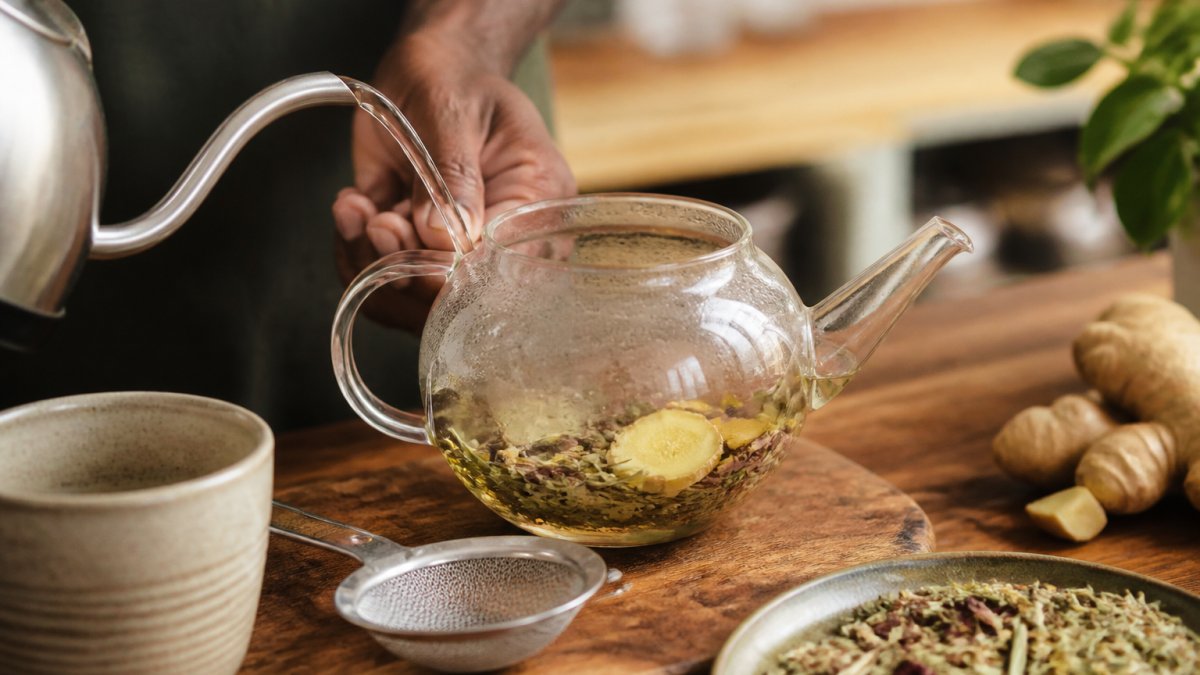
Our guide to brewing loose leaf herbal tea covers the full ritual, and you can browse our loose leaf tea selection.
For a caffeine-free, earthy option with a long Jamaican history, our wildcrafted Jamaican Medina ground loose leaf herb tea brews quickly and pairs well with ginger. We also carry Guinea Hen Weed loose leaf tea, a bold traditional brew, and Jamaican sea moss powder to stir into teas and smoothies.


Frequently Asked Questions
How does tea help with digestion?
Herbal tea helps mainly through two routes. Warm liquid and the act of sipping can ease stomach tension and support the natural movement of the gastrointestinal tract after a meal. Specific herbs add their own effects: ginger has the most consistent research behind it for nausea, while peppermint is studied for bloating and gas. A 2019 review of tea compounds and gut microbiome trials also found early evidence that tea extracts increased growth of beneficial bacteria in laboratory studies, though that does not prove a cup of herbal tea treats digestive conditions.
Can ginger or peppermint tea help an upset stomach?
Ginger tea is the better pick for nausea and queasiness, and it is the herb with the strongest research support among common digestive teas. Peppermint tea for digestion is best aimed at bloating, gas, and cramping rather than nausea. Both are caffeine-free and gentle enough for daily use. Steep fresh grated ginger for 5 to 10 minutes, or dried peppermint leaf for 5 to 7 minutes covered, since covering the cup keeps the aromatic oils that do the work from escaping in the steam.
How often can you drink herbal tea for digestion?
One cup after each main meal is a reasonable starting point, which works out to two or three cups a day for most people. Rotate herbs rather than drinking the same one all day: ginger in the morning, peppermint after lunch, and chamomile or fennel in the evening. Give any new herb a week or two before judging whether it helps, and keep a short note of symptoms so you are tracking real change rather than memory. If a tea causes heartburn or reflux, stop it and try a different herb.
Are there risks to drinking herbal tea for digestive symptoms?
Yes, and they are worth knowing before you buy. The Federal Trade Commission has flagged herbal-tea marketing that claims traditional use while admitting no scientific evidence of effectiveness, so treat bold labels with caution. Licorice root can raise blood pressure with regular use, and peppermint can worsen reflux in people prone to heartburn. Herbal teas can also interact with medication. Persistent heartburn, unexplained weight loss, blood in stool, or pain that wakes you at night are reasons to see a doctor rather than brew another cup.
Getting your digestion right is a daily practice, not a single purchase. The herbs with the best evidence, ginger and peppermint, are a strong place to start, and a mindful brewing habit makes them work harder. At Rastaman Brew, we bring you wildcrafted Jamaican herbs, sustainably sourced brews, and organic loose leaf and powdered options so you can build a routine that supports lasting wellness. Get started with Rastaman Brew and find the cup that fits your body.


